Best Jester Build in Mewgenics
Jester looks random at first, but it can become one of the highest-ceiling classes in Mewgenics. This guide focuses on the strongest Jester build ideas, especially Skill Share+, Super Luck, Libra, and luck-scaling synergy.

Is Jester actually good?
Yes, but not in the way people first expect. Jester is not strong because it is consistent. It is strong because its ceiling is unusually high when rerolls, passive sharing, and luck-based synergies line up. The class rewards planning, not blind randomness.
How Jester works
Jester plays more like a flexible scaling engine than a normal fixed-role class. It benefits from reroll access, passive sharing, and build-defining combinations that can turn weird-looking drafts into powerful runs. Its true value is strategic flexibility and build ceiling.
The biggest mistake is assuming Jester is just a joke class with random tools. In practice, the class becomes powerful when you identify a real payoff package and build toward it on purpose.
Why Jester is stronger than it looks
The biggest mistake is treating Jester like a joke class with random buttons. In practice, the class becomes powerful when you build around the right progression tools and passive combinations. Shared passives, luck scaling, and stat balancing can push a Jester run far above normal “random value.”
That is the real reason to play Jester: not because every run is stable, but because the best runs become absurdly efficient when a few key pieces lock together.
Best Jester build core
Skill Share+
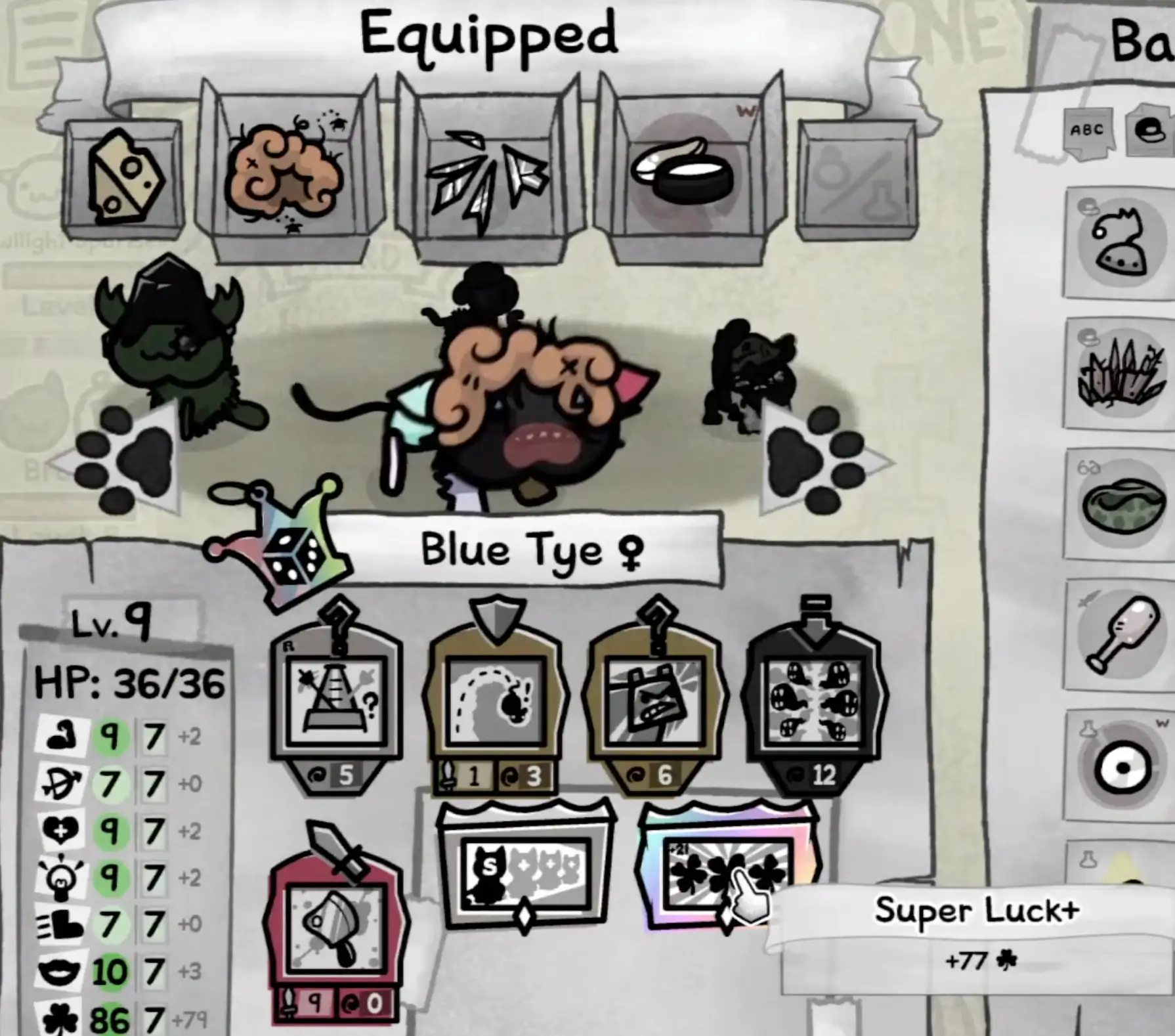
This is the centerpiece of the strongest Jester setups. Passive sharing changes the value of the whole team and turns Jester from a selfish oddball into a run-defining support and scaling class. When one high-value passive becomes a party-wide effect, Jester stops being “random” and starts becoming strategic.
Super Luck
Super Luck massively raises the upside of luck-based scaling and item interactions. It is one of the most explosive ways to make Jester feel broken instead of merely funny. Once luck becomes a true engine stat, the whole class starts behaving differently.
Libra
Libra smooths out stat weirdness and helps convert extreme luck or skewed growth into a more useful overall body. It makes high-roll Jester setups feel more stable and less like glass-cannon nonsense.
Mangy Wig
Mangy Wig turns luck scaling into real board presence. In the right setup, this gives Jester a concrete way to translate stat value into combat value rather than relying on vague “good randomness.”
Clown Makeup
Clown Makeup adds another layer of payoff to the build and helps make the overall package feel coherent instead of random. It is one more reason why Jester works best when you stack multipliers instead of mixing unrelated gimmicks.

Best Jester playstyle
The best Jester playstyle is not “click random things and hope.” It is identifying when a run can pivot into a high-value synergy package, protecting that package, and exploiting the class’s reroll and passive-sharing upside better than a normal class can.
In other words, Jester should be played like a scaling class with a weird interface, not like a meme character.
When Jester is worth unlocking or using
Jester is worth unlocking if you care about high-ceiling builds, progression payoffs, and synergy-driven runs. It is less attractive if you only want a stable, low-variance class that always performs the same way.
If your goal is to find the strongest possible interactions rather than the safest average class, Jester becomes much more attractive.
Common Jester mistakes
- • Treating the class as pure randomness instead of a synergy engine.
- • Failing to commit when a real build core appears.
- • Overvaluing novelty and undervaluing passive sharing.
- • Assuming Jester is weak just because it is inconsistent.
- • Building around cute one-offs instead of stacked multipliers.