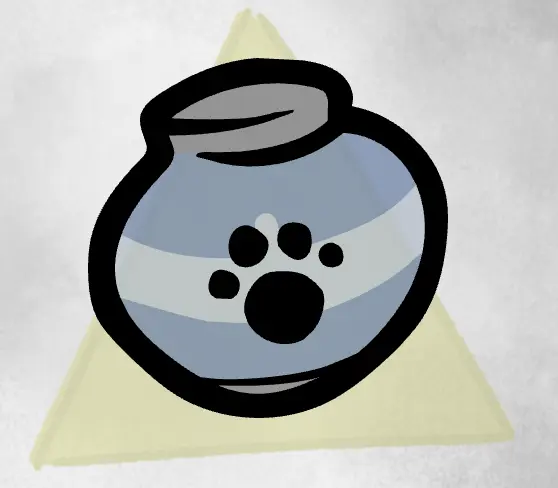
Soul Jar: How It Works in Mewgenics?
A trinket that starts as an empty jar, becomes a filled/full jar when a cat dies in battle, and later converts that stored cat into a one-turn ghost summon.
Soul Jar is best understood as a state-storage and ghost-summon trinket, not a passive safety item.
Use this page to understand the Empty -> Filled/Full state change, what Soul Jar preserves, how the ghost turn works, why Repair matters, and when the item is actually weak.
Quick verdict
Strong when used as a preservation tool
Soul Jar is best when you treat it as stored build value plus a later ghost turn, not as a generic passive insurance item.
Empty to filled state change
Start by proving the base mechanic: Soul Jar begins empty and only changes state after a battle death.
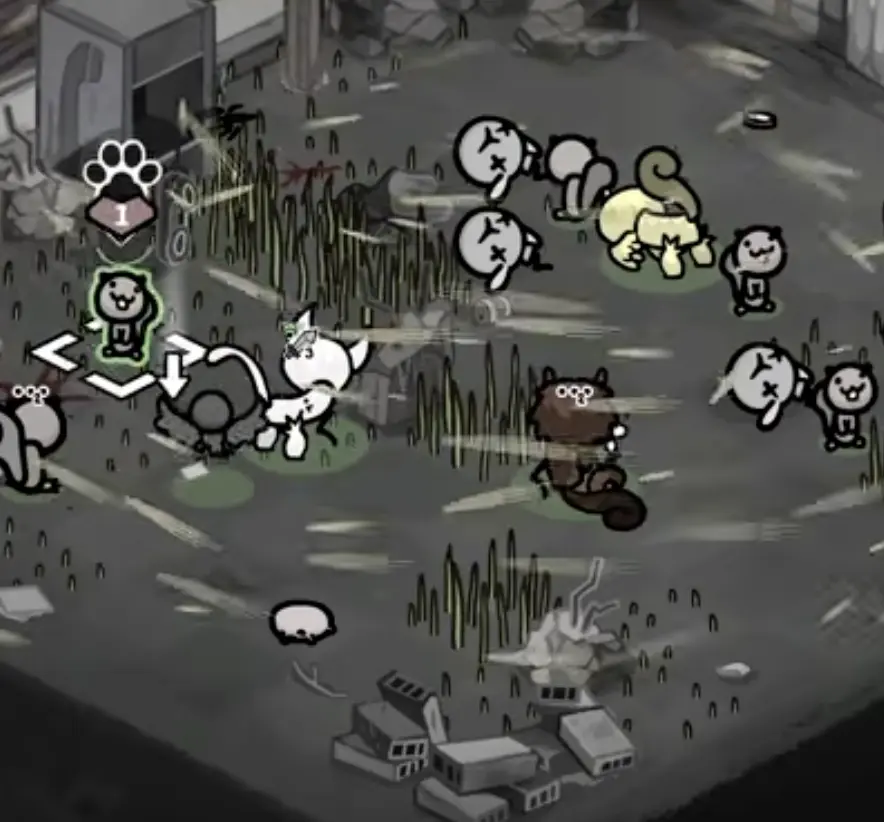
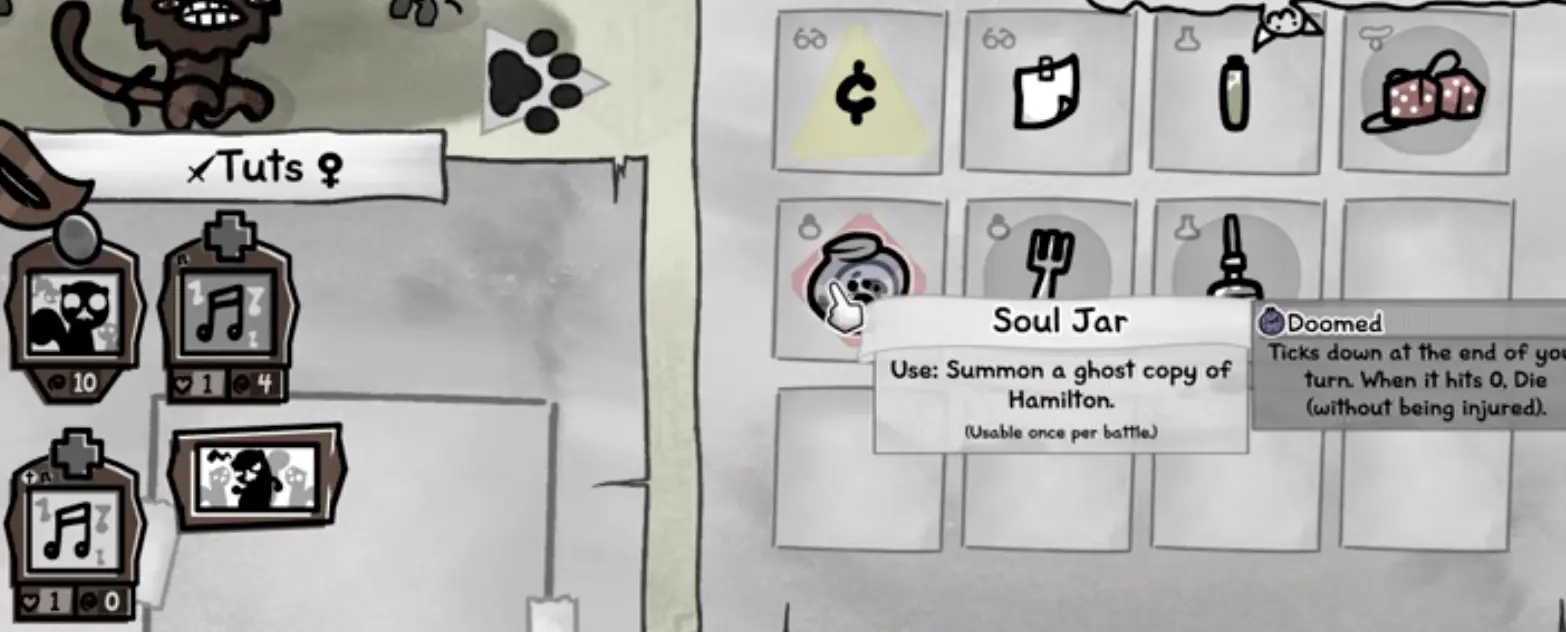
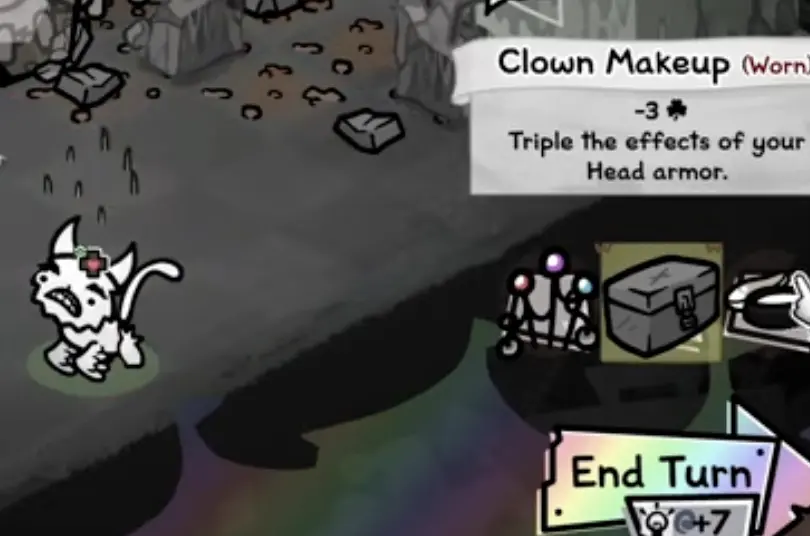
Filled / Full Soul Jar in battle
Show what the stored state looks like and how it turns into an actual ghost-summon line instead of a vague recovery effect.
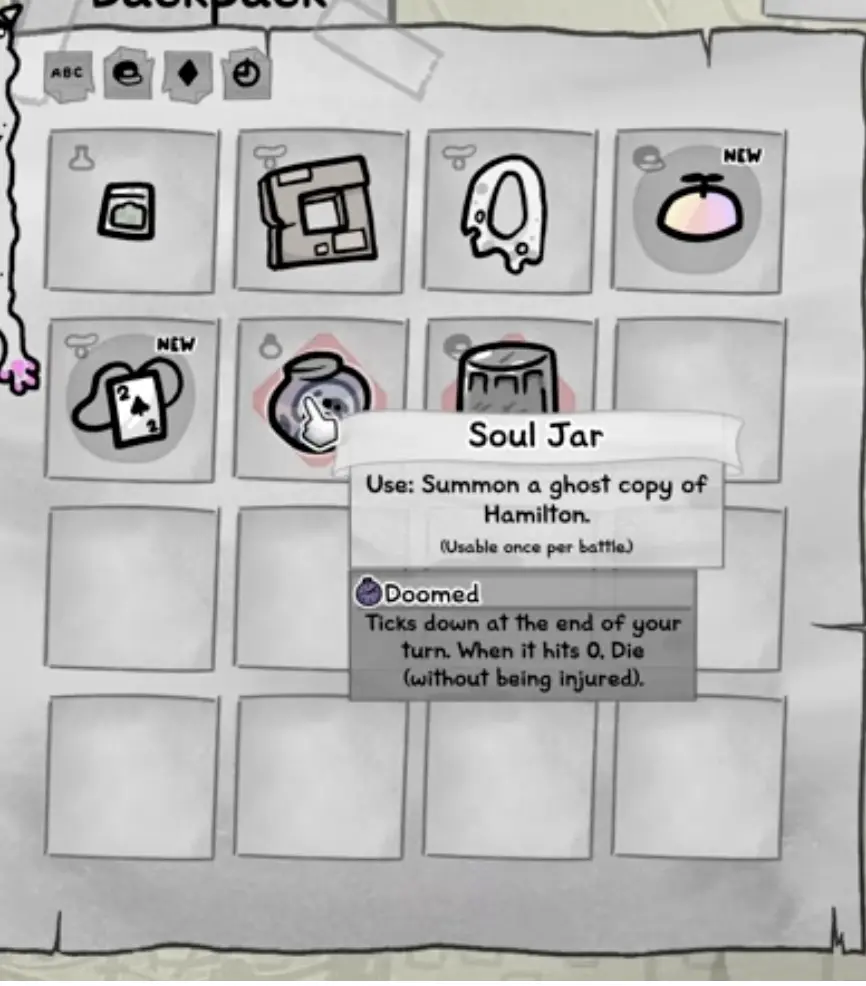
Repair and Worn interaction
The highest-value proof section is the Worn -> Repair interaction, because that is what turns Soul Jar from a strong trinket into a repeatable engine.
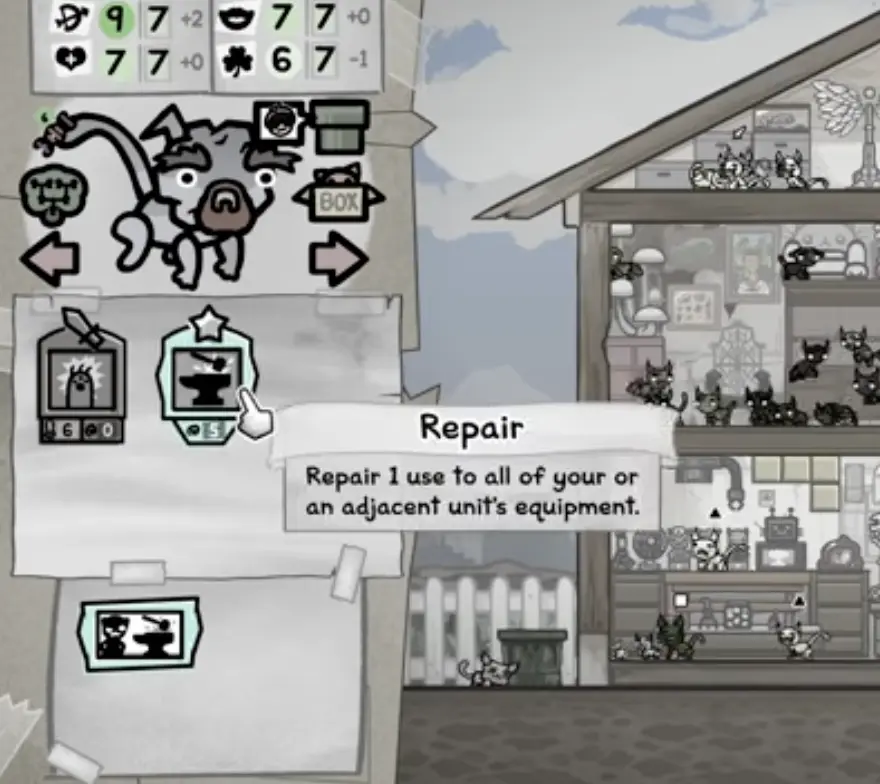
How Soul Jar Works
- Start with an Empty Soul Jar.
- If a cat dies during battle while carrying it, the jar stores that cat and changes into a Filled / Full Soul Jar state.
- The stored version preserves the dead cat's state at death, including its build, gear, collar, and other relevant context.
- Use the filled/full jar during battle to summon that cat's ghost copy.
- The ghost gets one controlled turn before disappearing.
- If Worn is not removed, the used jar can still break at run end.
Why Soul Jar Matters
Soul Jar sits between item preservation, delayed value, and one-turn ghost tempo. The key question is not just what it does, but whether your team can survive the death, preserve the right cat, and convert that stored state into useful value later.
What Soul Jar Enables
- Stored build value after death
- One-turn ghost-copy tempo in battle
- Advanced Repair + Soul Jar repeat-use setups
- Backup or redundancy lines when paired with Cap and Bells
Who should carry it
- •One high-value cat whose build is worth preserving after death
- •Teams that can survive the carrier's death and still cash in the later ghost turn
- •Repair setups that can remove Worn and protect repeat use
- •Runs with clear one-turn ghost value such as burst, utility, or clutch positioning
- •Synergy lines involving Cap and Bells or other repeat-use support
Who should not carry it
- •Runs that instantly collapse when one core cat dies
- •Low-Charisma stored cats whose ghost turn cannot cast meaningful skills
- •Players treating Soul Jar like a passive safety net instead of a planned value item
- •Runs where the carrier's death timing is chaotic or always catastrophic
- •Event-sacrifice assumptions where you expect Soul Jar to trigger outside normal battle death
The real cost
- •Soul Jar only creates value if a cat actually dies during the run.
- •It preserves the dead cat's state at death, including current mana constraints, so weak or low-Charisma builds can produce poor ghost turns.
- •A used jar can still carry Worn and face the normal run-end break risk unless that state is removed.
- •The item is much weaker if the rest of the team cannot survive long enough to use the stored value correctly.
- •Soul Jar does not become abusive on its own; its ceiling comes from specific Worn-removal or repeat-use synergies.
Why players fail with it
- •Players think Filled Soul Jar or 'Temporary Soul Jar' is a different item instead of understanding the empty-to-filled state change.
- •They store a low-Charisma cat and only later realize the ghost cannot execute the key spell line.
- •They build around the ghost value but forget that Worn can still destroy the used jar at run end.
- •They expect event sacrifices to trigger Soul Jar and lose both the cat and the item value.
- •They put it on the last realistic carry and leave nobody alive to benefit from the preserved build.
When to take it
Take it early only if you already see a realistic preserve target or a likely Repair shell. Otherwise it is often speculative.
Best when your team is stable enough to survive one death and still convert the stored soul into useful tempo later.
Extremely strong late if you already have a finished carry build, a clear ghost-turn use case, and a way to protect or repair the jar line.
Related items and mechanics
Use these pages to explore Soul Jar's closest synergies, nearby mechanics, and related item pages.