Breeding in Mewgenics is not about forcing one perfect kitten. It is about improving your odds over time with better rooms, stronger parents, safer pairings, and a healthier gene pool.
If you remember only one rule, make it this: breeding is a planning game, not a guarantee game.
Quick answer: In Mewgenics, breeding quality is shaped by room stats, parent base stats, inheritance odds, and inbreeding risk. The biggest levers are Stimulation for inheritance reliability, Comfort for breeding stability, and gene-pool management for keeping strong lines usable across multiple generations.
How Breeding Works in Mewgenics
Breeding works best when you think in terms of line management, not single outcomes. You are not assembling an exact kitten from fixed parts. You are stacking the odds in your favor over repeated pairings.
At a high level, the loop looks like this:
- Build rooms that support the kind of offspring you want.
- Choose parents by base stats, not just inflated current totals.
- Rotate in useful strays to keep your gene pool healthy.
- Check relationships before committing to risky pairings.
- Repeat strong pairings, keep the best offspring, and fold them back into your long-term line.
The biggest mistake newer players make is treating breeding like a deterministic crafting system. It is not. The real skill is improving the conditions around each pairing so that strong outcomes become more likely over time.
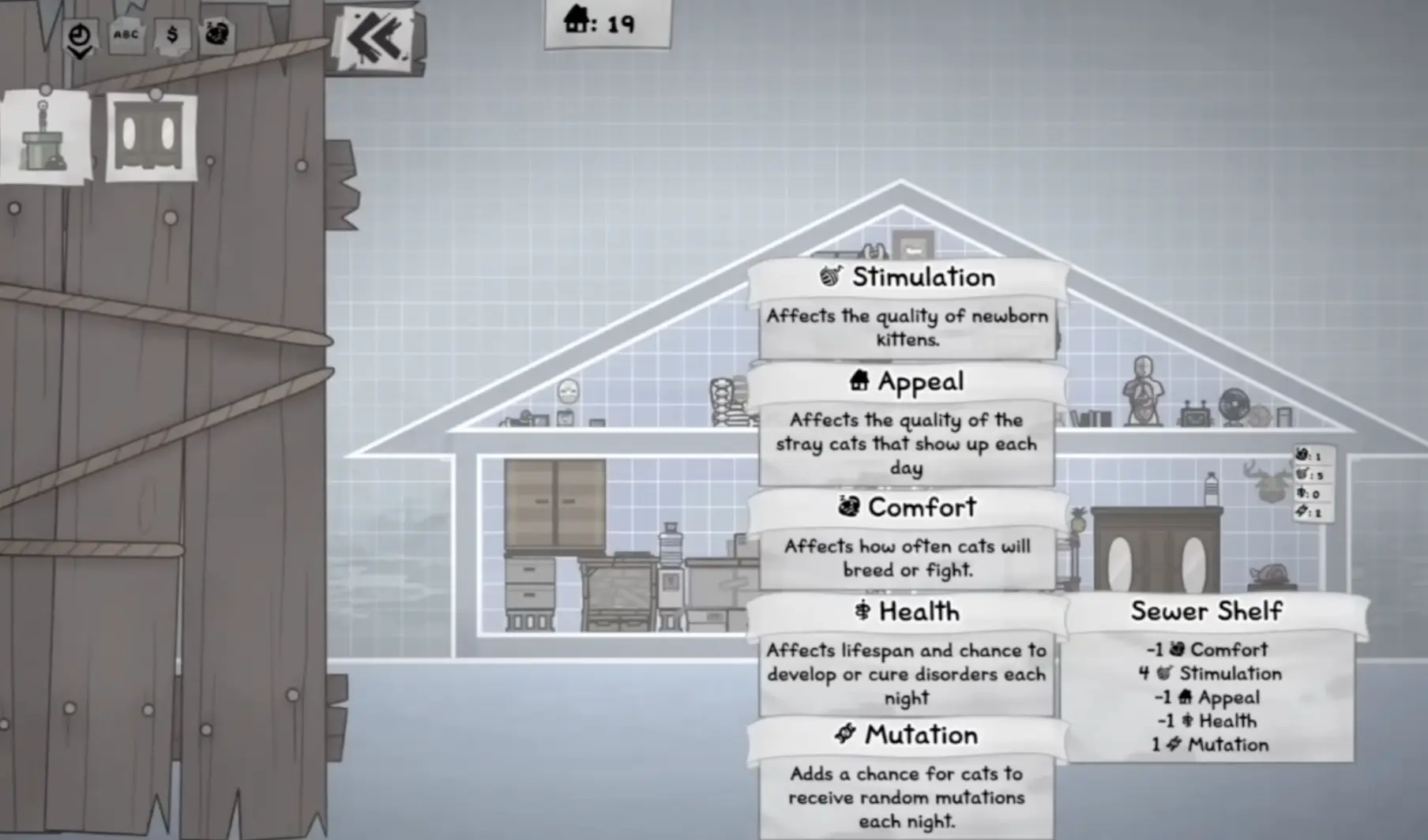
Room Stats Explained
Room stats are not flavor text. They directly affect breeding reliability, stray quality, room stability, and long-term line management.
How Does Stimulation Work in Mewgenics?
Stimulation is the single most important breeding stat because it affects how reliably valuable traits and abilities pass to newborns.
This is the stat most players should optimize first. For stat inheritance, players often use practical community-tested thresholds like these:
| Stimulation | What it means in practice |
|---|---|
| 0 | High-value inheritance behaves like a coin flip and is often treated as roughly 50% |
| 50 | Community estimates often place reliable “good inheritance” around 70% |
| 800 | Community estimates often describe inheritance as feeling 90%+ reliable |
These thresholds are based on community testing and may vary. Verify with the simulator before optimizing around specific values.
That changes how you should use the stat:
- if you want a noticeable improvement, aim for a moderate Stimulation room first
- if you want your line to feel more stable, do not settle for “some Stimulation”
- if you are optimizing around exact inheritance outcomes, test the pairing in the simulator instead of trusting rough thresholds blindly
Stimulation also affects more than raw stat inheritance. It matters for ability inheritance too:
| Stimulation | Inheritance breakpoint |
|---|---|
| 32+ | Guarantees 1 active ability |
| 95+ | Guarantees 1 passive ability |
| 196+ | Guarantees 2 active abilities |
So if you only think of Stimulation as “better newborn stats,” you are missing half its value. It is really the stat that makes specialized breeding lines more reliable.
Simulator check: before committing to a pairing, use the simulator to ask whether the room’s Stimulation is high enough for the inheritance reliability you actually want. If your goal is a stable line, “high” is not enough. You want a number that clears a real threshold.
Appeal
Appeal affects the quality of stray cats that show up.
This matters more than many players expect. Strong strays are one of the best ways to refresh a narrow gene pool, introduce new base stats, and reduce your reliance on close-family pairings.
Appeal is not just about getting more cats. It is about getting better refresh options for your breeding pool.
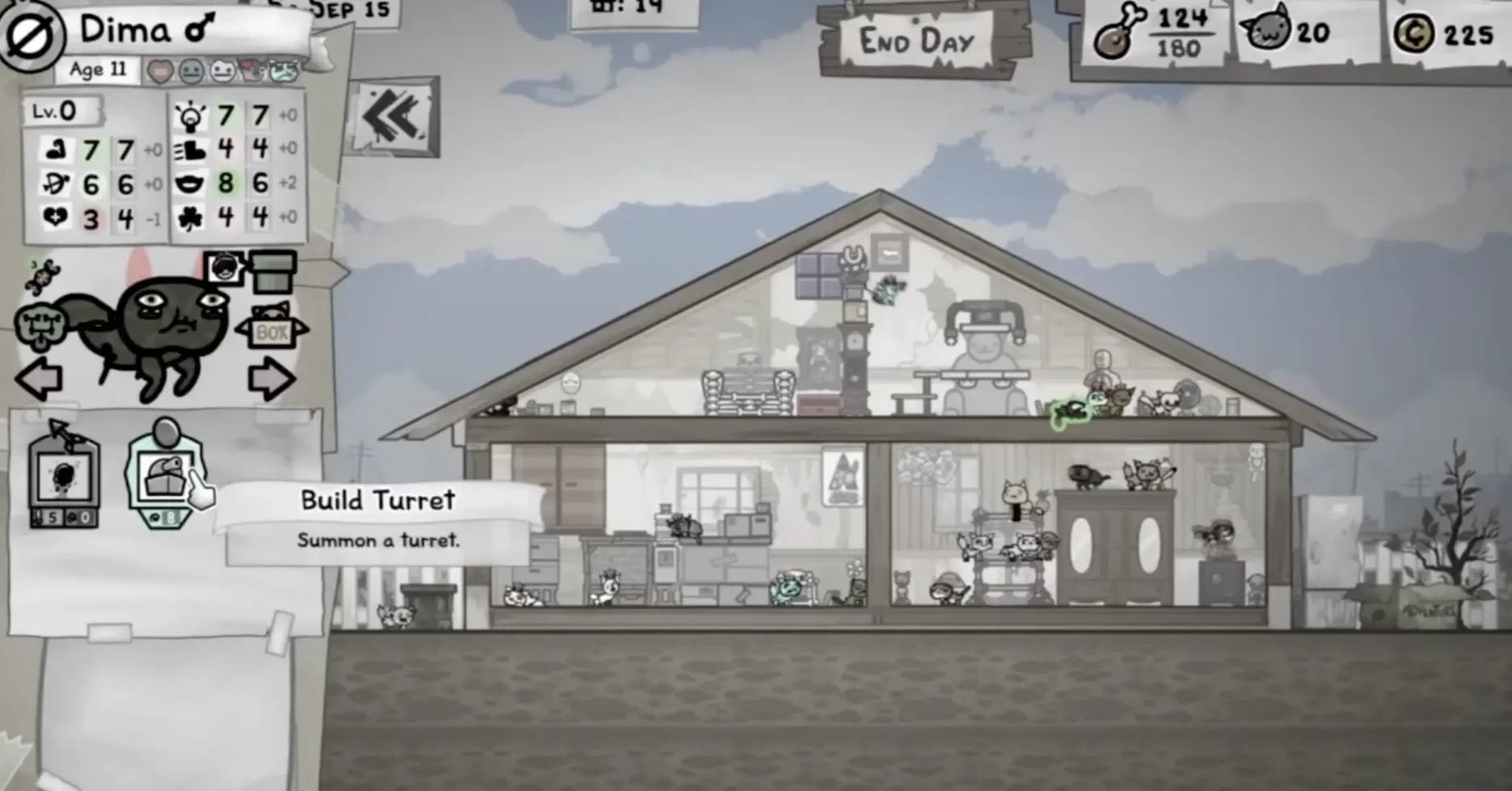
Simulator check: after bringing in a strong stray, compare that cat against your current breeders to see whether it improves the line more than reusing an existing relative.
Comfort
Comfort affects how often cats breed or fight, so it controls how stable your breeding room actually is.
This stat matters because Comfort drops from very specific room problems:
- each extra cat can reduce Comfort
- each pile of feces can reduce Comfort
- once a room has more than 4 cats, every extra cat makes overcrowding worse
That means Comfort is not a passive stat you set once. It is something that degrades if you overcrowd the room or let waste pile up.
For players, the useful rule is simple:
- keep breeding rooms from becoming overstuffed
- clean waste regularly
- do not assume a room that worked earlier is still functioning the same way now
Higher Comfort means a room behaves more predictably. Lower Comfort creates friction in the exact place where you want consistency.
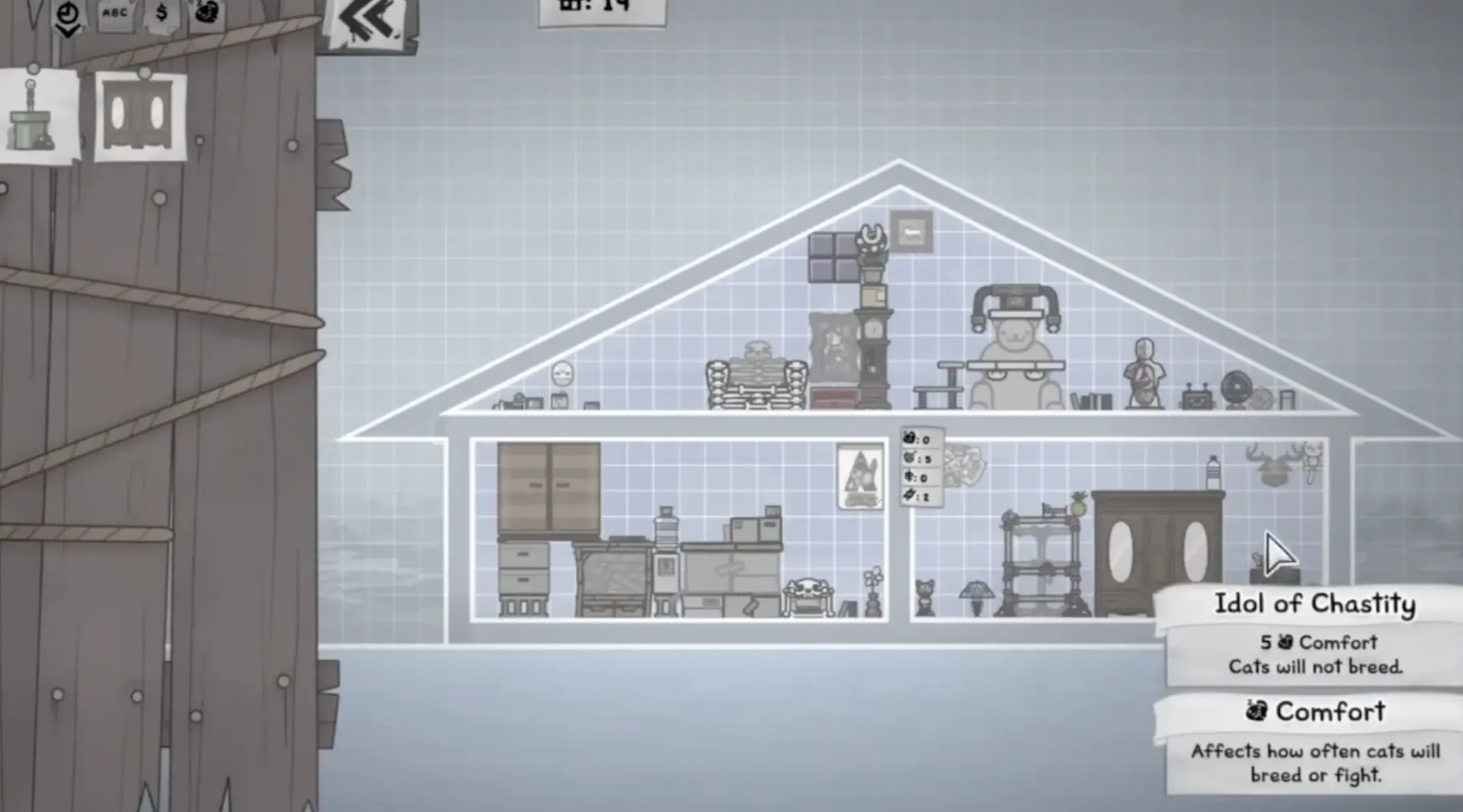
Simulator check: if a pairing looks good on paper but underperforms in practice, check Comfort and room population before assuming the parents are the problem.
Health
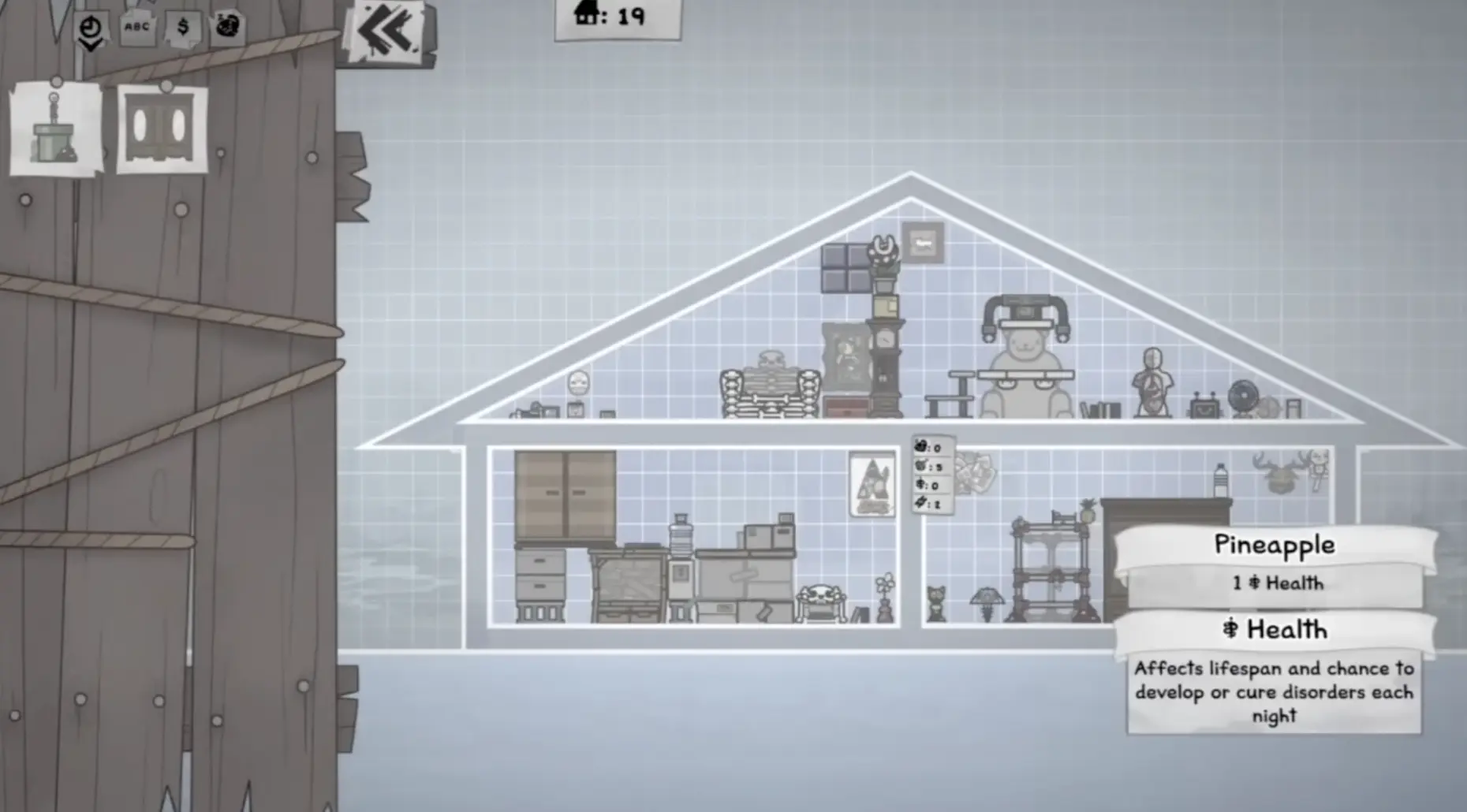
Health affects lifespan and disorder outcomes.
Health is less flashy than Stimulation, but it helps preserve breeders you want to keep active across multiple generations. It is especially useful when you want to keep valuable but imperfect breeders around longer while you stabilize the line.
Mutation
Mutation adds a chance for cats to gain random mutations.
That gives you another angle for improving a line, especially if you are experimenting over many generations instead of only chasing clean, predictable pairings.
The key point is that Mutation becomes much more meaningful when paired with enough Stimulation to make favorable inheritance more reliable across generations.
In plain terms:
- Stimulation controls inheritance reliability
- Appeal improves stray quality
- Comfort stabilizes breeding behavior
- Health helps preserve breeders longer
- Mutation increases upside for experimental lines
How Inheritance Works
Inheritance in Mewgenics is best understood as weighted probability, not certainty.
That applies to four different systems:
- base stats
- active abilities
- passive abilities
- disorders and body-part outcomes
Stats
A strong parent does not automatically create a strong child. What you are really doing is improving the odds that high-value traits recur over time.
This is why Stimulation matters so much. It changes inheritance from “coin-flip chaos” into something you can actually build around.
Active and Passive Abilities
Ability inheritance is where many breeding guides stay too vague.
In practical terms:
- 32+ Stimulation guarantees the kitten inherits one active ability
- 95+ Stimulation guarantees the kitten inherits one passive ability
- 196+ Stimulation guarantees the kitten inherits two active abilities
That means serious breeding lines should not evaluate room quality only through base stats. If you are breeding for combat kits, Stimulation is also your ability-inheritance lever.
Does Skill Share+ Guarantee Passive Inheritance?
There is one especially important exception to the normal passive rules:
If either parent has Skill Share+, that parent’s other passive is guaranteed to pass regardless of Stimulation level.
This is one of the strongest inheritance exceptions in the game because it gives you a way to target a specific passive without relying on normal Stimulation-based randomness.
Disorders
Disorders work differently, and this is where a lot of players misunderstand the system.
Each parent has an independent 15% chance to pass a disorder to the offspring.
Most importantly, Stimulation does not reduce this risk.
So even if you build an extremely optimized room, strong Stimulation cannot protect you from disorder inheritance. That makes breeder selection and line management more important than room optimization alone.
Simulator check: use the simulator to test inheritance upside, but treat disorder risk as a separate decision. A pairing can be excellent for stats and still be bad for line health.
What Is the Twins Probability in Mewgenics?
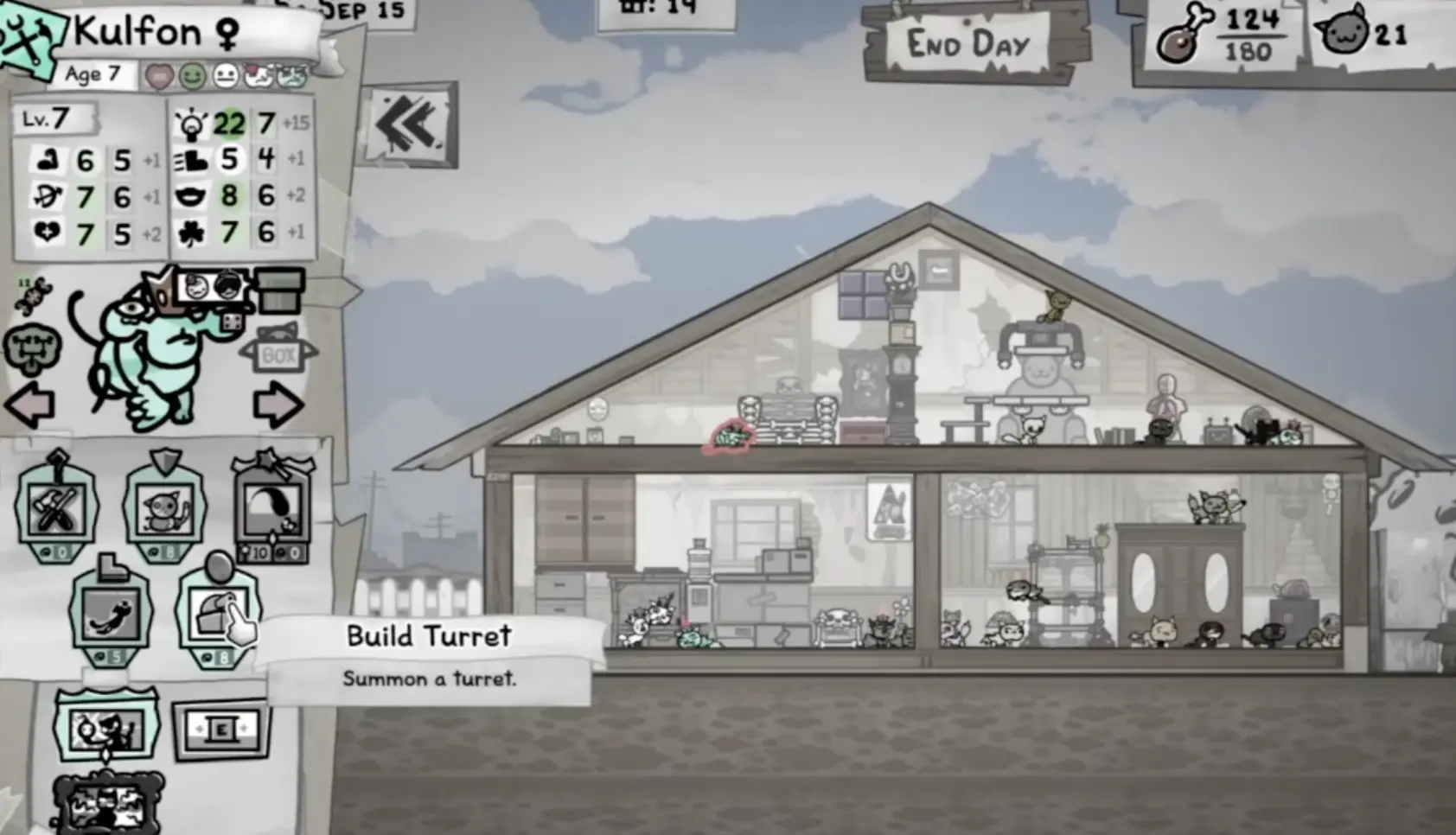
Most pairings produce one kitten, not a large litter.
A commonly cited community estimate puts the average litter rate at about 1.08 kittens per breeding attempt, which implies that twins show up roughly 17% of the time.
This is a community-reported estimate, not an official developer-confirmed number.
Just as importantly, no room stat is commonly documented as directly controlling twin probability. So if you are searching for “mewgenics twins probability” or “how to get twins in Mewgenics,” the best current answer is:
- twins appear to be possible but not common
- the probability is usually treated as roughly one in six
- players should not assume that Stimulation, Comfort, or other room stats directly force twins
Base Stats vs Current Stats
This is one of the most important breeding rules in the game:
Breed around base stats, not inflated current totals.
A cat can look amazing because of temporary growth, bonuses, or run-built value. That does not automatically mean those numbers are what you are passing to the next generation.
Breeding value comes from base stats, because those are the numbers the inheritance system is actually drawing from over time.
When you evaluate breeders, focus on the boxed base stats rather than the flashy totals shown elsewhere on the sheet.
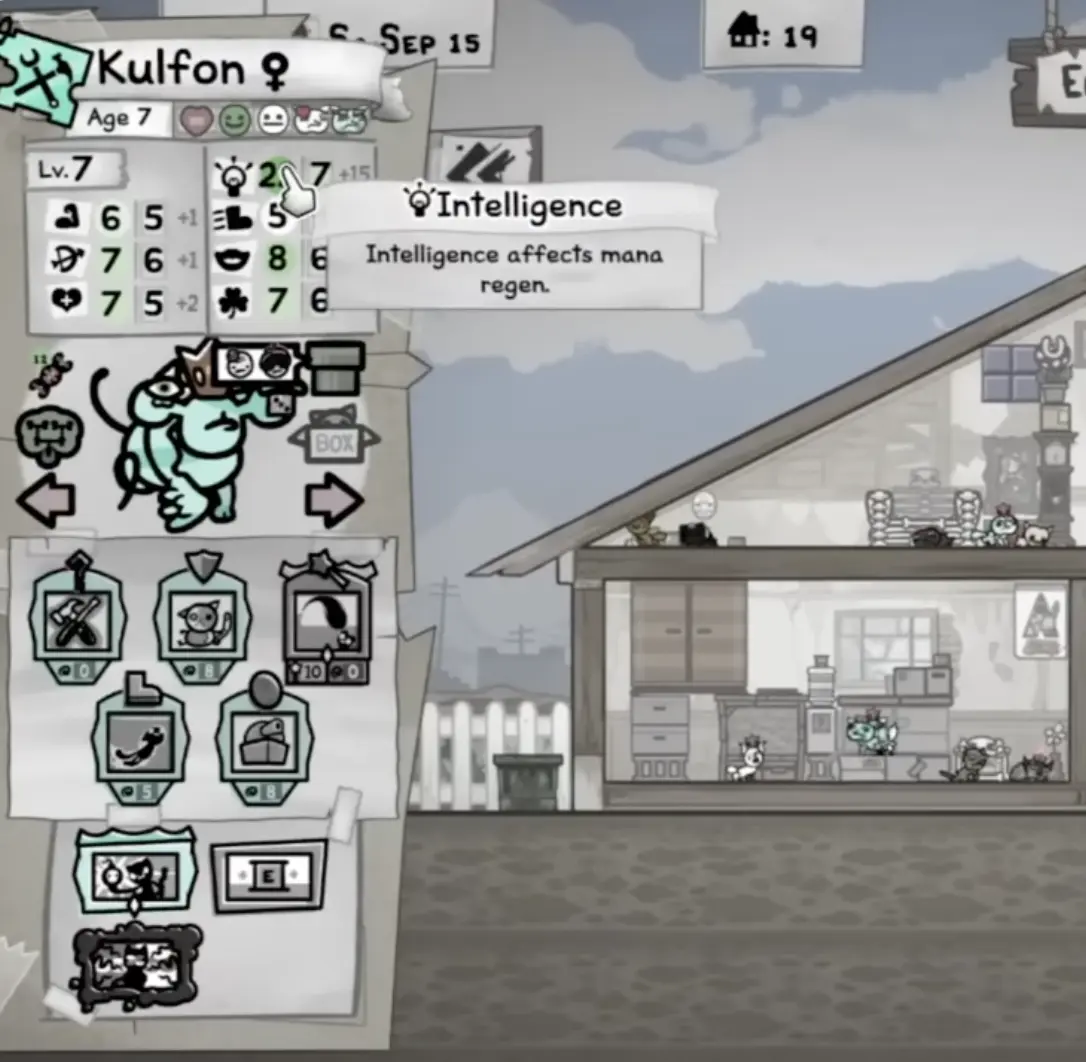
That changes how you judge breeding value:
- a cat with huge displayed Intelligence but average base Intelligence is not a true high-Int breeder
- a more balanced cat with stronger base values can be better for line stability
- if you want to raise one stat over time, you need parents that actually carry that stat in their base profile
How to Avoid Inbreeding in Mewgenics
Inbreeding is not just a yes-or-no problem. It is a risk curve.
The useful way to think about it is through Closeness, because that gives you an actual planning tool instead of a vague warning.
Inbreeding quick-reference table
| Closeness | Relationship example | Inbreeding coefficient |
|---|---|---|
| 1 | parent + child | 25% |
| 2 | grandparent + grandchild | 37.5% |
| 3 | great-grandparent + great-grandchild | 43.75% |
| 4 | more distant direct relation | increases again |
| 5+ | distant enough relation | begins to dilute |
These thresholds are based on community testing and may vary. Verify with the simulator before optimizing around specific values.
Two things matter here:
First, closer pairings stack risk faster than many players expect.
Second, Closeness 5+ can start diluting the coefficient again, which means not every shared ancestor is equally dangerous.
That gives you a better rule for real play:
- avoid repeatedly folding the same elite line back into itself at low Closeness
- keep side branches alive instead of collapsing into one dominant line
- use strong strays to reset the pool before your best options become unusably related
The goal is not to avoid every related cat forever. The goal is to stop your best breeders from becoming trapped in a tiny family circle.
Simulator check: after you enter a pairing, check Closeness before you look at upside. A pairing with great inheritance odds can still be the wrong move if it tightens the line too much.
How to Unlock Tink in Mewgenics
If breeding matters to you, unlocking Tink early is one of the best progression decisions in the game.
The reason is not just convenience. Tink unlocks information that turns breeding from guesswork into a system.
To unlock Tink’s breeding-relevant features, you need to donate kittens. The most important early threshold is:
- donate 10 kittens to Tink
As you donate more, Tink unlocks additional layers of information and control, including:
- Libido
- Aggression
- Inbreeding status
- Gaydar
- family-tree context for safer pairing decisions
That turns breeding from guesswork into planning.
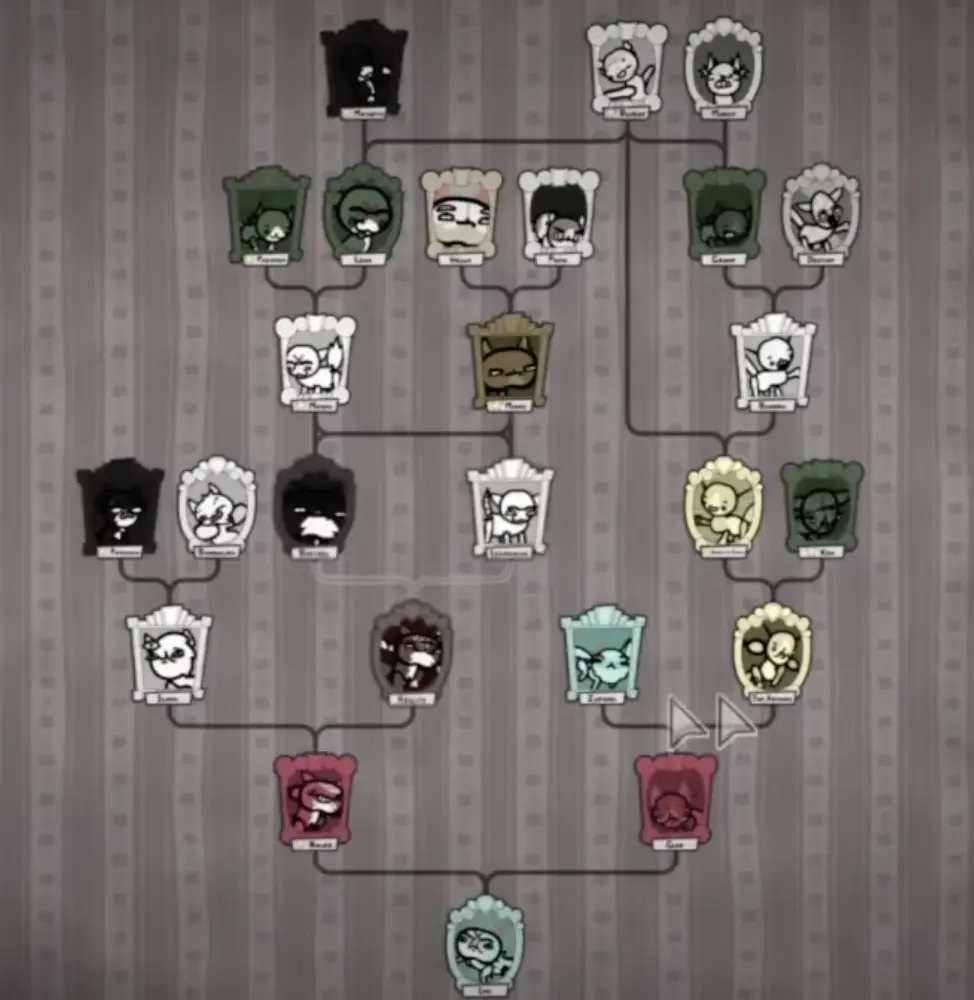
Without family-tree visibility, it is much easier to overuse a strong line by accident. With it, you can maintain branches deliberately, find safer pairings faster, and keep valuable traits circulating longer.
So “unlock Tink early” is not just a general quality-of-life tip. It is a breeding infrastructure upgrade.
Best Breeding Room Setup
A strong breeding house is usually not one giant all-purpose room. It is a multi-room system.
The best setups usually include three kinds of space.
1. A main breeding room
This is where you want strong Stimulation and stable Comfort.
Do not overload it. Comfort falls when:
- the room gets crowded
- waste accumulates
- too many cats stay in the same breeding space for too long
A breeding room should be optimized for reliability, not capacity.
2. A holding room
Use this for cats you want to protect, delay, or separate from active breeding.
One especially useful item for house control is Idol of Chastity. It adds Comfort while stopping breeding, which makes it ideal for a holding room.
3. A side room for experiments
Use this to isolate a risky line, test a mutation-heavy setup, or preserve a weird breeder with long-term potential.
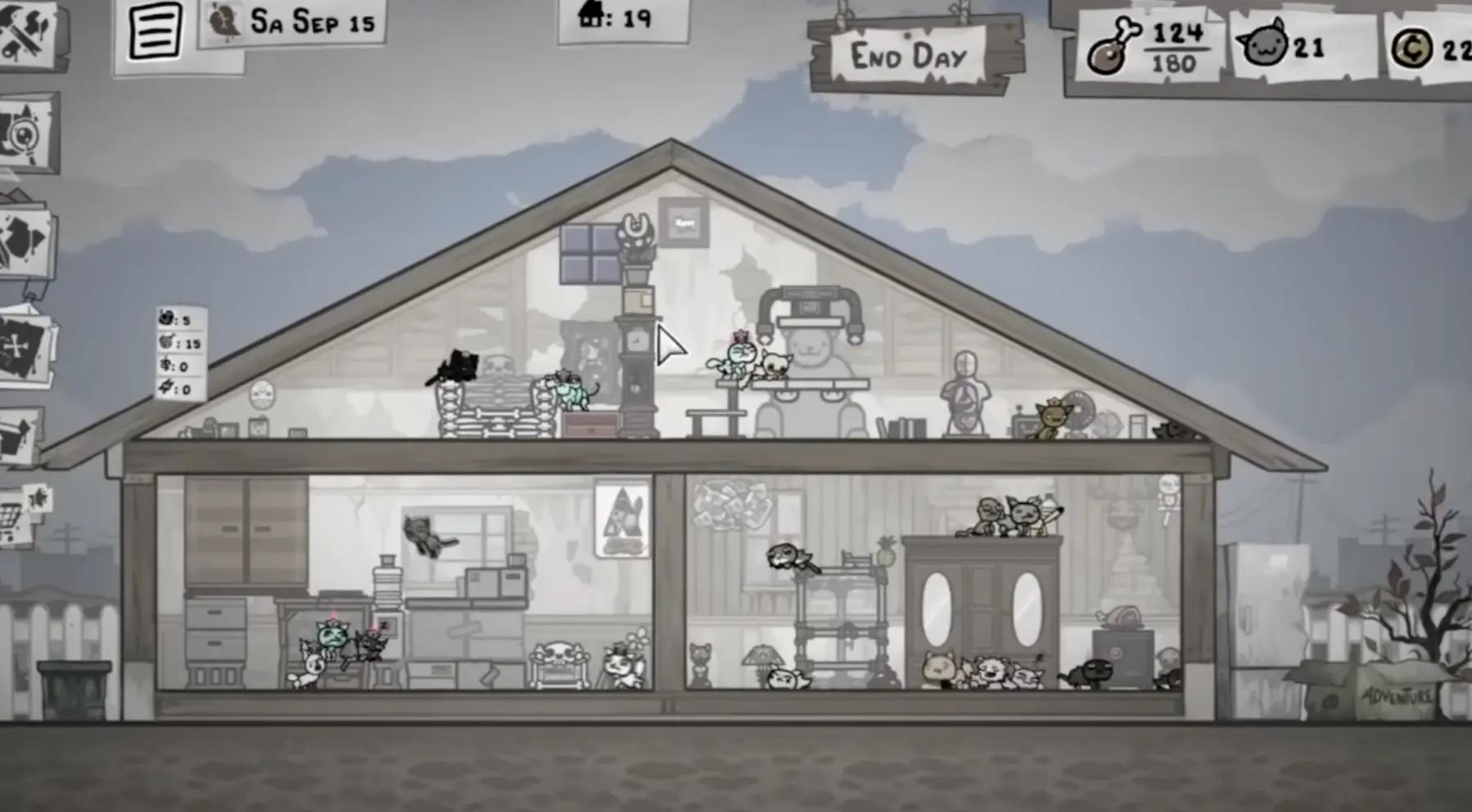
The best room plans usually separate:
- active breeders
- overflow cats
- experimental lines
- non-breeding holding space
That separation gives you more control, higher Comfort, and fewer accidental problems.
How to Use the Breeding Simulator
A breeding guide is most useful when it helps you make better decisions immediately, not just understand theory.
The simulator works best when you use it at the same points where real breeding decisions happen.
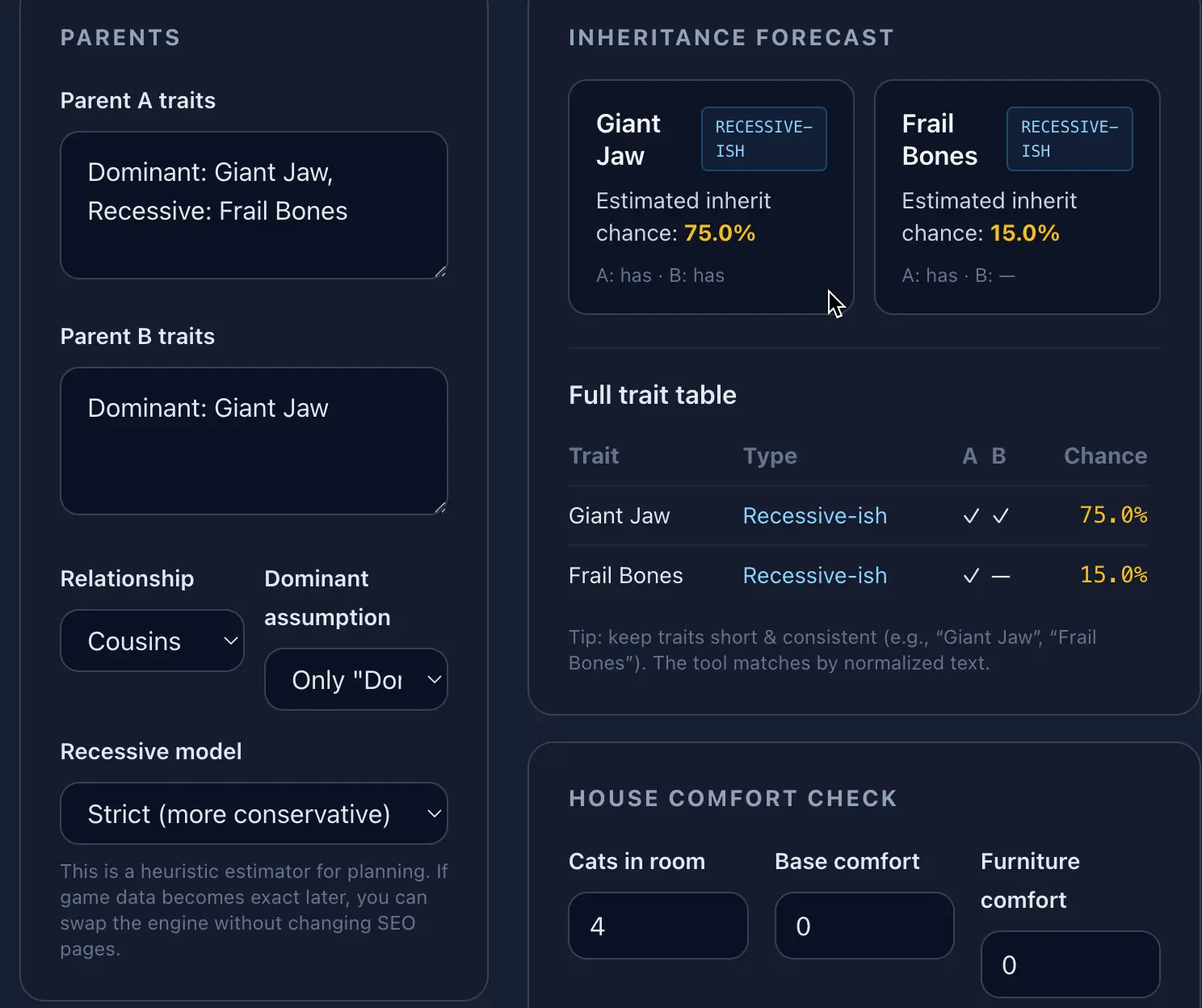
Use it after checking Stimulation goals
Before you commit to a pairing, ask one question first:
Is the room’s Stimulation high enough for the inheritance reliability I want?
If your goal is just “better than average,” moderate Stimulation may be enough. If your goal is to reliably preserve a high-value line, you need real thresholds instead of vague room quality.
Use it before accepting inbreeding risk
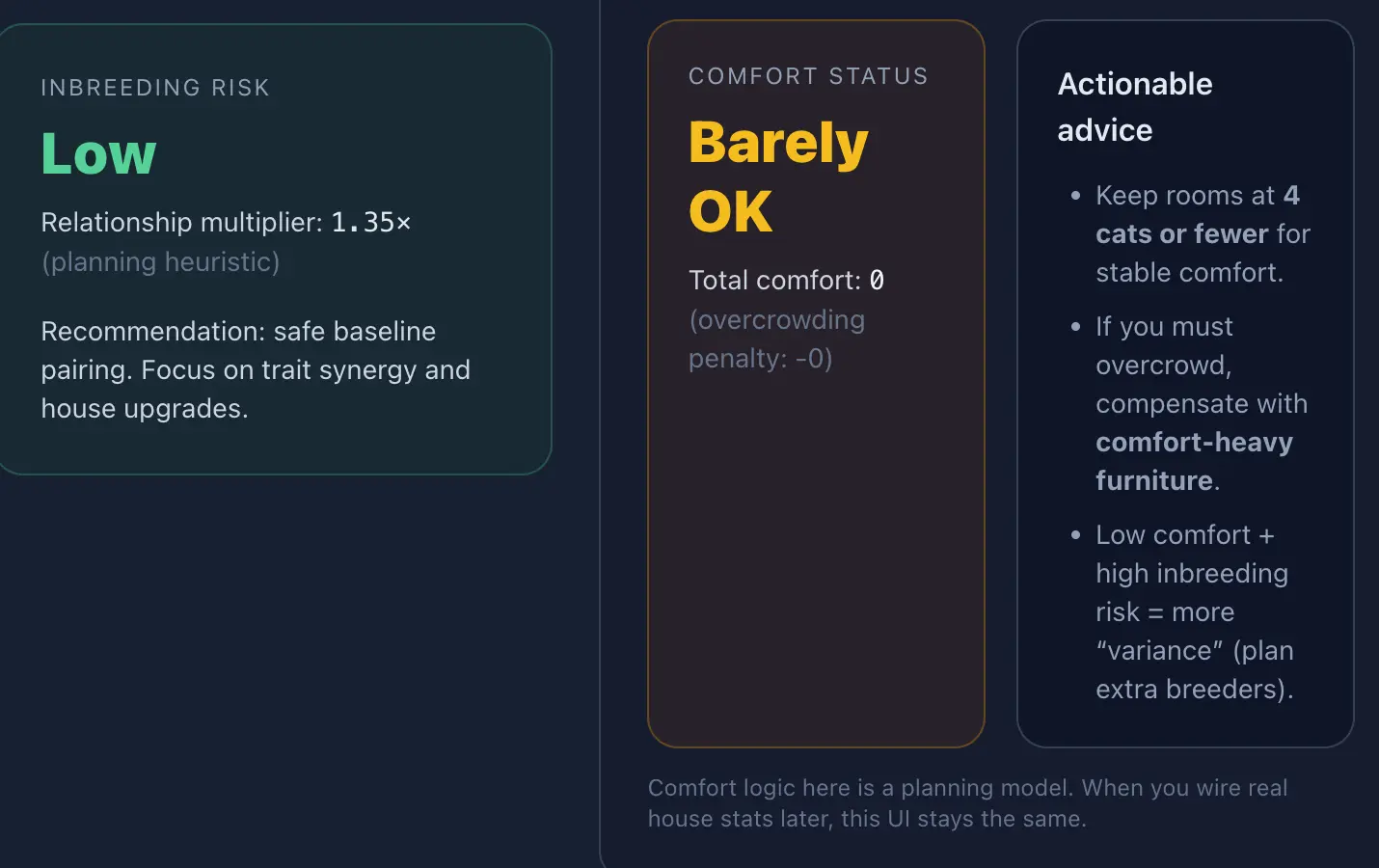
A pairing with strong upside is not automatically a good pairing.
Run the parents through the simulator, then check:
- relationship distance
- line tightness
- whether this pairing improves the line or only squeezes more value out of the same family branch
Use it when evaluating a stray vs an existing breeder
One of the best uses of the simulator is comparing a new stray against a current breeder in the same role.
That helps you answer a much better question than “is this cat good?”:
Does this cat improve my line more than the breeder I already have?
Use it to separate inheritance upside from disorder risk
A simulator can help you evaluate upside, but you should still treat disorder inheritance as a separate layer of risk.
If one or both parents carry disorder risk, do not let a strong forecast hide a bad long-term decision.
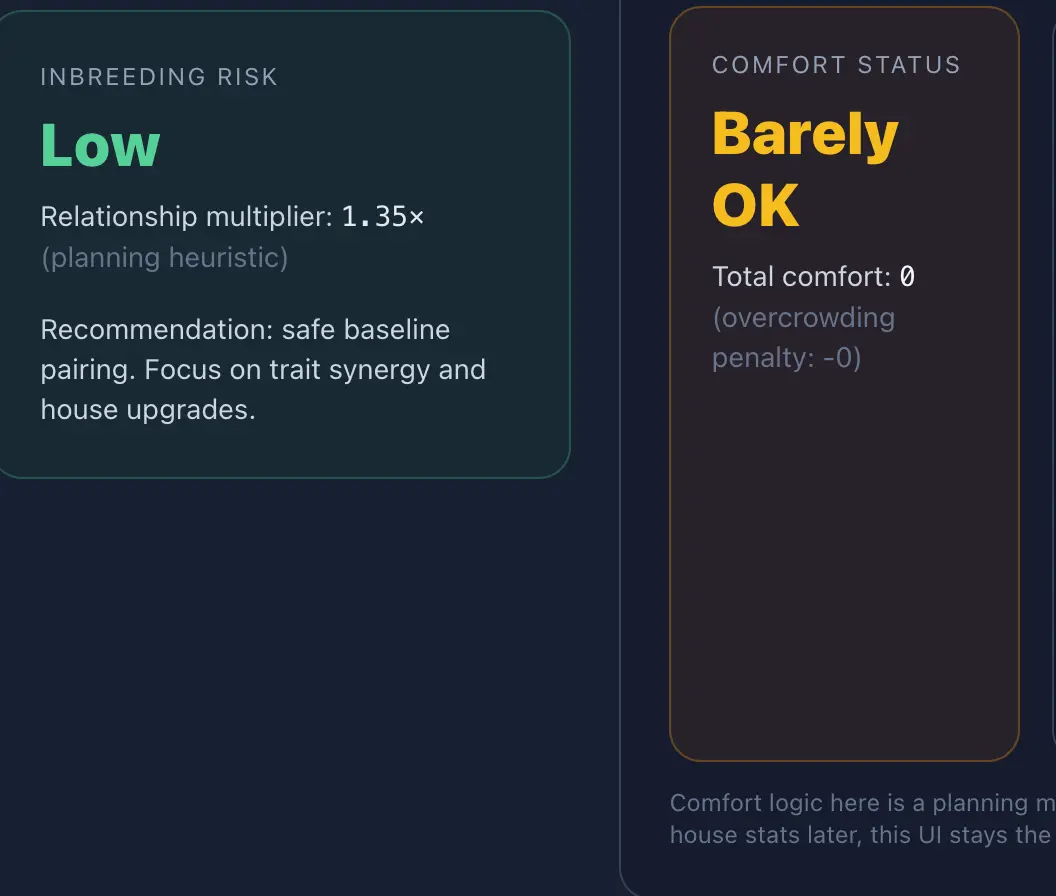
The best use of the simulator is not predicting one kitten perfectly. It is helping you avoid obviously bad pairings, protect line quality, and make each generation cleaner than the last.
Common Breeding Mistakes
Treating Stimulation as a vague “good” stat
Stimulation is not just nice to have. It has real breakpoints that change ability inheritance and can make inheritance planning much more reliable.
Ignoring Comfort maintenance
A breeding room can degrade over time if you overcrowd it or let waste accumulate. If your room is unstable, your breeding results will feel unstable too.
Forgetting the Skill Share+ exception
If you never plan around Skill Share+, you are ignoring one of the cleanest ways to target passive inheritance.
Chasing displayed stats instead of base stats
This is the classic trap. A line can look stronger on paper than it really is.
Ignoring strays
A strong stray can do more for your long-term breeding health than forcing one more close-family pairing.
Treating every disorder as unusable
Some cats look flawed at first glance but still have real breeding value. The real mistake is forgetting that disorder inheritance is a separate probability check that Stimulation does not fix.
Expecting one perfect result
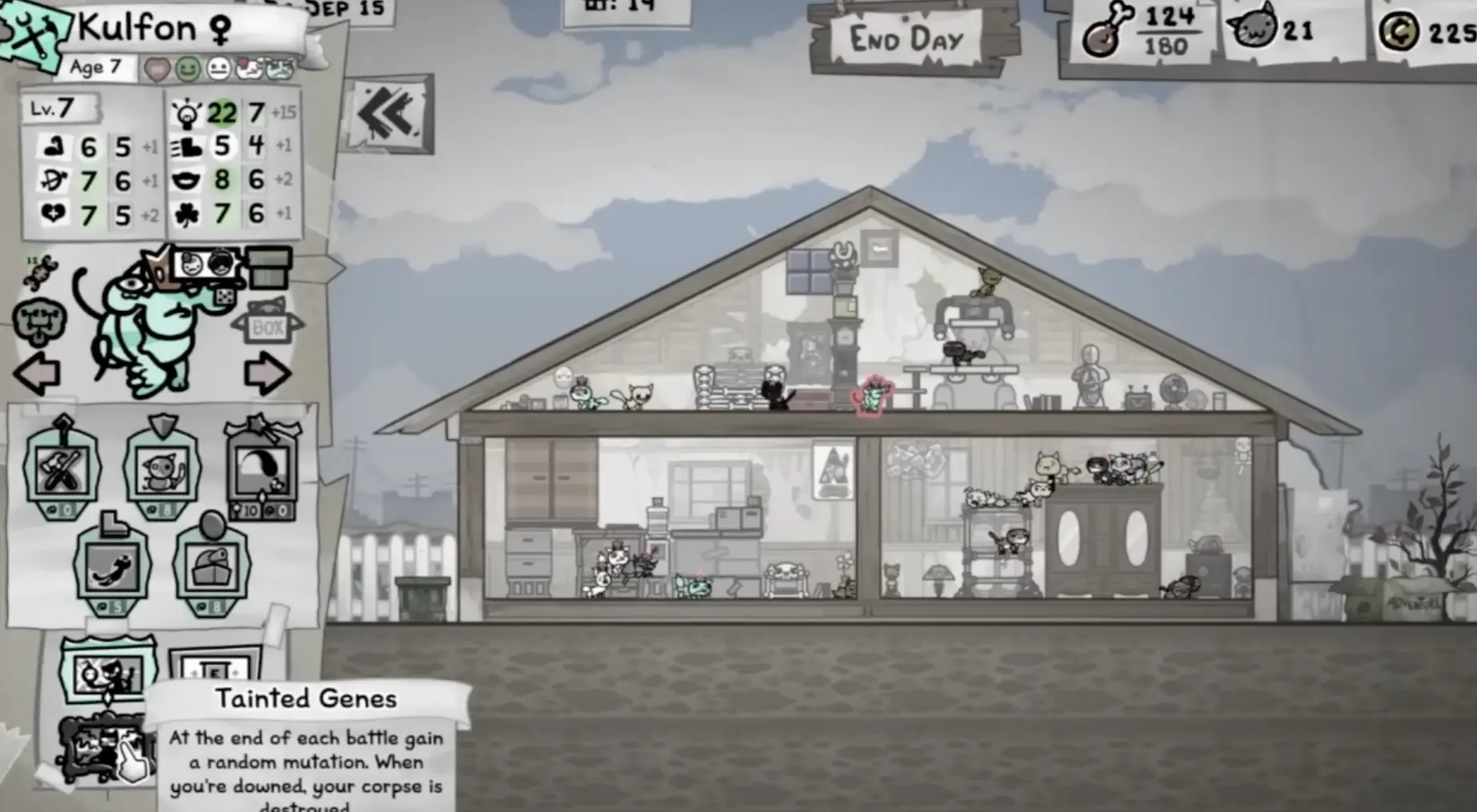
Breeding rewards iteration. You are building a line over time, not rolling one magical kitten and ending the process.
Mewgenics Breeding FAQ
What does Stimulation do in Mewgenics?
Stimulation improves inheritance reliability. It affects how consistently strong traits are passed on and also controls active/passive ability inheritance breakpoints.
Does Skill Share+ work for breeding in Mewgenics?
Yes. Skill Share+ is the major exception to normal passive inheritance rules because it guarantees that parent’s other passive will pass down.
What is the twins probability in Mewgenics?
The safest wording is that twins are possible but uncommon. Community estimates often put them at roughly 17%, but that number is not an official developer-confirmed stat.
Does Stimulation reduce disorder inheritance?
No. Disorder inheritance is a separate roll. Each parent independently has a chance to pass a disorder, and Stimulation does not remove that risk.
How do you unlock Tink in Mewgenics?
Donate kittens to Tink. The first major breeding-relevant threshold is 10 donated kittens, which starts unlocking the information tools that make breeding much easier to manage.
Is Comfort important for breeding in Mewgenics?
Yes. Low Comfort causes cats to fight instead of breed. Comfort drops by 1 for each pile of waste and for each cat beyond the first four in a room. Keeping rooms clean and not overcrowded is the main way to stabilize it.
Final Take
The core of Mewgenics breeding is not “breed the best two cats and hope.”
It is:
- push Stimulation high enough to make inheritance reliable
- keep Comfort stable by controlling crowding and waste
- judge breeders by base stats, not inflated totals
- manage inbreeding by Closeness, not gut feeling
- treat disorder risk as its own inheritance layer
- use Skill Share+ when you want a true passive-inheritance exception
- unlock Tink early so breeding decisions stop being blind
- use the simulator at each decision point, not only after theory
Do that consistently, and breeding becomes much more predictable. Not because the game becomes deterministic, but because your decisions become cleaner and your odds get better.
If you want the fastest next step, compare your current breeders in the simulator, check the inbreeding risk, and make sure your house Comfort actually supports the kind of line you are trying to build.