If your cats keep fighting in the breeding room instead of producing kittens, the problem usually is not random.
Most of the time, one of two things is happening:
- the room itself has become unstable
- the cats themselves are a bad match
That distinction matters.
If the whole room is fighting, the first suspect is usually Comfort. If only one pair keeps starting trouble while other cats behave normally, the first suspect is usually aggression, compatibility, or a relationship conflict.
This guide is here to help you figure out why a breeding room has turned hostile, not to explain every breeding mechanic in the game.
Quick answer
If cats are fighting in your breeding room, check these first:
- Is the room’s Comfort too low?
- Is there poop or other mess dragging Comfort down?
- Is the room overcrowded?
- Have you accidentally mixed incompatible cats into the same room?
- Have you unlocked enough Tink information to inspect aggression and libido?
- Is there a Lover / Rival conflict in the room?
- Is this actually a failed breeding room, or did you accidentally create a low-Comfort Fight Club?
That is the fast version. Everything below shows how to diagnose the real cause.
1. Low Comfort is the most common reason cats fight instead of breed
The most important room-level rule is simple:
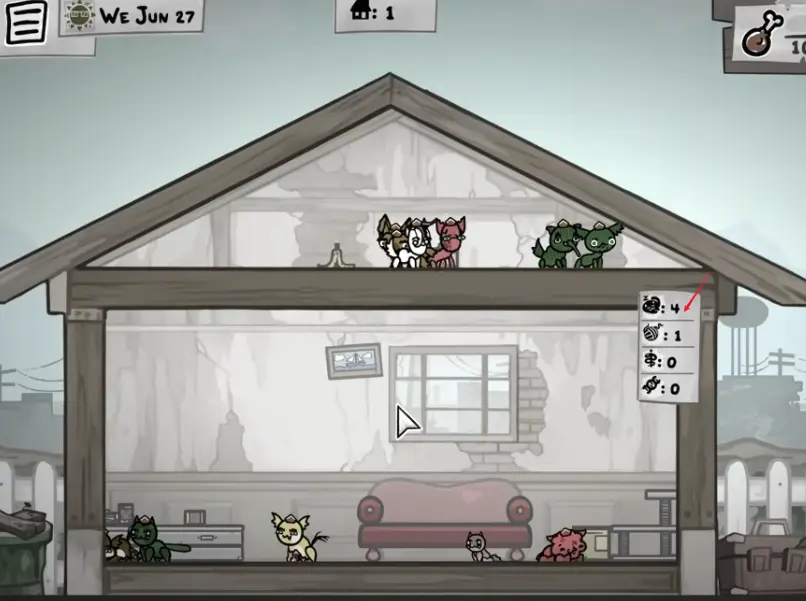
Higher Comfort makes cats breed more often and fight less often.
That means if your breeding room keeps breaking into fights, the first suspect is usually not Stimulation, inheritance, or bloodline planning. It is the room’s Comfort stat.
What this means in practice
Comfort dropping below zero is a warning sign, not an immediate hard failure.
The practical way to think about it is:
- positive Comfort = safer breeding environment
- negative Comfort = unstable room, rising chance of fights, weaker breeding reliability
- very low Comfort = the room stops behaving like a real breeding room
So if the room feels chaotic, do not start by blaming the pair.
Start by asking:
- Has Comfort fallen recently?
- Did the room used to work before it became crowded or dirty?
- Are you still treating a degraded room like it is a dedicated breeding room?
A breeding room can look “good enough” on paper and still drift into failure if Comfort quietly collapses over time.
2. Poop and crowding quietly push a breeding room toward fighting
Mewgenics does not clean the house for you.
If poop piles up and you ignore it, Comfort drops. And if too many cats are packed into one room, it becomes easier to miss those messes and harder to keep the room stable.
What to check
- Is there visible poop in the room?
- Are you letting overflow cats live with your active breeders?
- Did the room become a storage room instead of a breeding room?
- Are there simply too many cats to manage cleanly?
A lot of players think “the pair is bad” when the real problem is just that the room became messy and overstuffed.
3. Overcrowding is a room problem, not a pair problem
This is one of the easiest traps in the whole breeding cluster.
A breeding room usually works best when it is a controlled room for the active pair, not a general-purpose housing block. Once you mix active breeders, overflow cats, injured cats, and random holdovers into one space, the room becomes unstable.
Your best breeders end up living in the same conditions as disposable cats, and fighting becomes much more likely.
The most practical rule is:
If your breeding room is crowded, diagnose the room before you diagnose the cats.
This is also why room guides keep recommending separate spaces for holding, mutation, and fight-oriented play. A room can fail because it is doing too many jobs at once.
4. Sometimes the room is fine, but the cats are the problem
If the room is clean, stable, and not overcrowded, but one pair still keeps fighting, the next suspect is the cats themselves.
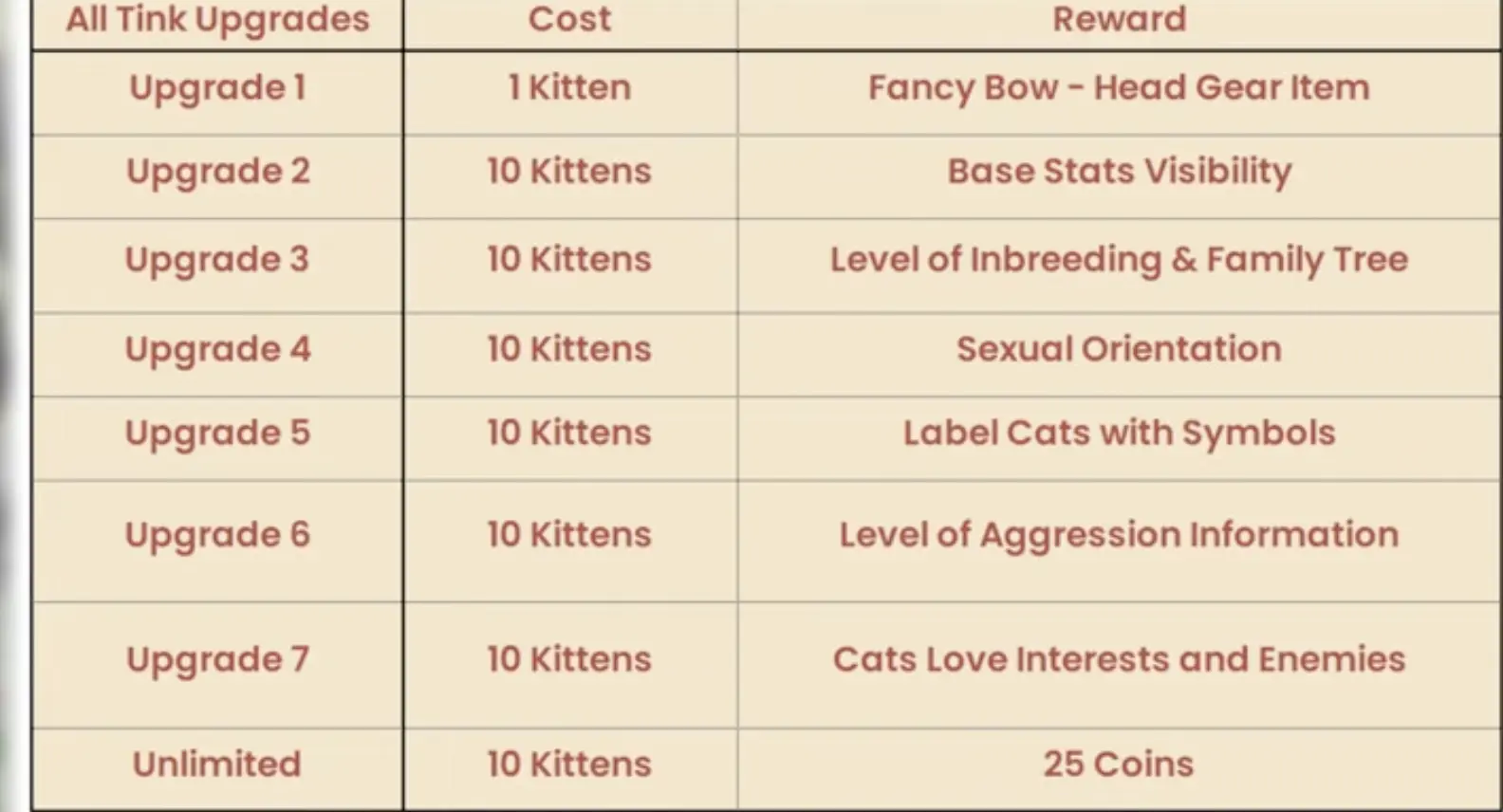
This is where Tink becomes essential. Once you unlock enough Tink information, you stop guessing and start seeing the hidden variables behind failed pairings.
That includes things like:
- libido
- aggression
- other hidden compatibility clues
Why this matters
A room-level problem usually affects many cats.
A cat-level problem usually affects one pair or follows one breeder from pairing to pairing.
That gives you a very useful diagnosis rule:
- Whole room is fighting → suspect Comfort, mess, overcrowding
- Only one pair is fighting → suspect aggression, hostility, or another hidden compatibility issue
A better way to describe Aggression
Aggression is better treated as a hidden continuous tendency, not a simple “high / medium / low” personality label.
That matters because a cat with very high Aggression is not just “more likely to fight if Comfort is bad.” It can become an independent fight trigger even when the room itself is still mostly stable.
So if one breeder keeps causing trouble across different pairings, the cleanest answer is often not “keep tuning the breeding room around it.”
The cleaner answer is usually:
- move that cat into a different room
- test a different breeder
- or deliberately place it in a fight-oriented room instead of destabilizing your breeding suite
5. Lover / Rival conflicts can turn a stable room into a hostile one
This is one of the easiest room failures to misread.
Mewgenics tracks relationship history. Cats can fall in love, reject each other, and become rivals. Public commentary around the game and player discussion both point to these relationship states as real forces behind room behavior.
That means you can create a fight source without changing the furniture at all.
The practical version
If a cat already has an established partner and you try to force it into a new pairing inside the same social space, you can create a relationship conflict instead of a breeding opportunity.
That gives you a new diagnosis pattern:
- the room used to be fine
- a new pairing was introduced
- now fights suddenly spike
- the problem is not general Comfort collapse, but social conflict inside the room
What to check
- Did you move a cat into a new breeding room while its old partner is still nearby?
- Did two cats used to behave normally before you changed the pairing plan?
- Did the room start fighting after a “betrayal” style pairing swap?
If the answer is yes, stop treating it like a generic Comfort problem. You may have introduced a Lover / Rival conflict.
6. What fighting tells you about your room
This is the most useful diagnostic frame in the whole article:
fighting is sometimes information, not just failure.
If you read the pattern correctly, the fights tell you what kind of problem you actually have.
Full-room fighting usually means the room is broken
If multiple cats are fighting, breeding has dropped across the room, and the space feels chaotic, the most likely cause is systemic room failure:
- Comfort dropped
- poop piled up
- overcrowding got out of control
- the room stopped being a dedicated breeding room
That is a room problem first.
One pair fighting usually means the cats are the problem
If most of the room behaves normally but one pair keeps causing trouble, that usually points to:
- high Aggression
- hidden hostility
- compatibility failure
- Lover / Rival conflict
That is a cat problem first.
A sudden rise in fighting with no obvious room change often means a new social conflict
If the room’s furniture, population, and layout look basically the same, but fighting suddenly increases after you rotated in a new cat, suspect relationship history before you start rebuilding the room.
Stronger survivors in a low-Comfort room means you may have triggered Fight Club behavior
If low-Comfort cats keep fighting and the winners seem to come out stronger, that is not just a weird bug-looking side effect. That is the same logic players intentionally exploit in dedicated fight rooms.
That means the room is no longer functioning like a breeding room, even if you originally meant it to.
7. Diagnose the problem by symptom
A checklist is useful, but breeding-room fights are easier to fix when you work backward from what you are seeing.
| What you are seeing | Most likely cause | Check first |
|---|---|---|
| The whole breeding room is fighting | Room-level Comfort failure | Clean up poop, reduce overcrowding, re-check room role |
| One specific pair always fights | Pair-level aggression or incompatibility | Check Tink info for libido, aggression, and other hidden issues |
| The room used to work, but now it feels unstable | Room degraded over time | Cleanup, overflow cats, population pressure |
| Two cats used to be fine, but after a pairing swap they started fighting | Lover / Rival conflict | Check whether an old partner is still in the same room |
| A cat causes trouble with multiple partners | That cat is the bottleneck | Remove it from the breeding room and test a different breeder |
| Low-Comfort room keeps producing fights and stronger survivors | That may be an intentional or accidental Fight Club room | Do not move your prized breeders into it |
Use this matrix when the room is giving you mixed signals and you need to decide what to check first.
Sometimes the room is broken.
Sometimes the cats are broken for each other.
Sometimes you built a fight room and forgot that it is behaving exactly as designed.
8. The Fight Club exception
This is the most important exception to keep in mind: sometimes fighting is the point, not the problem.
Sometimes players want cats to fight.
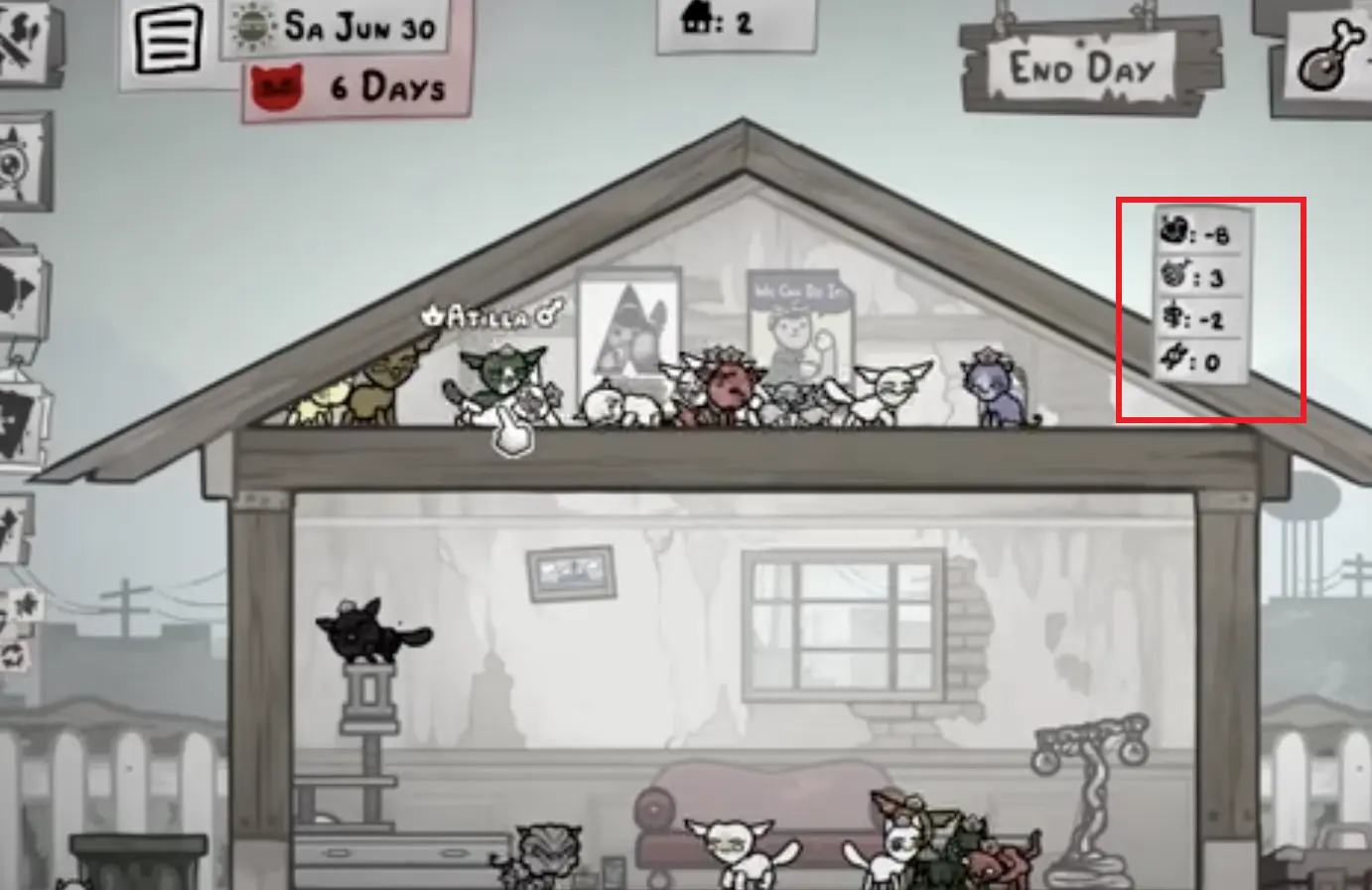
One advanced strategy is to deliberately create a low-Comfort Fight Club room by stuffing average or expendable cats into a rough environment. Public player guides describe this as a room where cats fight, get injured, and sometimes come out stronger, especially when the player also stacks Mutation in that room. In one beginner breeding guide, the creator explicitly describes a separate fighting room with reduced Comfort and explains that winning fights can boost stats over time.
Why this matters
“Cats are fighting” is not automatically a problem.
It is only a problem when they are fighting in the wrong room.
If a low-Comfort room was deliberately built for average, expendable, or mutation-focused cats, then fighting may be the point rather than the bug.
But if that same behavior is happening in your main breeding room, then the room has failed its job.
The real rule
A Fight Club is a specialized room.
A breeding room is a protected room.
Do not confuse the two.
If you want a clean breeding line, keep your prized breeders out of low-Comfort experiment rooms.
9. A fast troubleshooting checklist
Run this before you blame the line.
Room check
- Is the breeding room clean?
- Is Comfort still high enough?
- Are there too many cats in the room?
- Has the room become a mixed-use holding room?
- Are you accidentally running a low-Comfort setup where a breeding room should be?
Cat check
- Have you unlocked enough Tink information?
- Does one cat show unusually high aggression?
- Does one cat repeatedly fail with multiple partners?
- Are you blaming the room for a cat-specific issue?
Relationship check
- Did you recently swap pairings?
- Is an old partner still in the same room?
- Did fighting begin right after a new romantic or breeding arrangement?
Strategy check
- Is this supposed to be a breeding room, or did you effectively turn it into a Fight Club?
- Are you putting prized breeders in a room meant for expendable cats?
- Are you trying to fix behavior with Stimulation instead of fixing Comfort first?
10. When to stop forcing the room
Sometimes the room itself is the failed build.
If you already know:
- Comfort keeps collapsing
- cleanup is lagging behind
- the room is crowded
- fighting is spreading
- your best breeders are getting dragged into chaos
then stop trying to rescue the setup one night at a time.
Split the room.
Most late-game houses work better once you stop trying to make one room do everything.
Related guides
If the room is stable again and you want the next layer of breeding knowledge, read these next:
- Why Are My Cats Not Breeding in Mewgenics? — for failed pairings, same-room checks, Tink, and orientation blockers.
- Mewgenics Breeding Guide: How It Works — for the full breeding system, inheritance, Tink, Comfort, and long-term line management.
- Best Breeding Room Setup in Mewgenics — for room roles, furniture tradeoffs, holding rooms, mutation rooms, and keeping your main breeding room stable.
Final take
If your cats are fighting in the breeding room, the answer usually comes down to one of four things:
- the room’s Comfort collapsed
- the room is too crowded or too messy
- the cats themselves are a bad match
- a relationship conflict turned the room hostile
And the most important diagnosis rule is this:
If the whole room is fighting, suspect Comfort first. If only one pair is fighting, suspect the cats.