If your cats are not breeding in Mewgenics, the problem usually is not just bad luck.
Most failed pairings come down to one of a few blockers:
- the cats are not set up correctly in the same space
- the room’s Comfort is too low
- the room is messy or overcrowded
- the cats are secretly incompatible
- you have not unlocked enough Tink information to see the real reason
- the pair is blocked by orientation or gender-status rules
This page is a troubleshooting guide, not a full breeding theory guide.
The goal is simple: help you figure out why a pairing is failing right now.
If you want the full inheritance system, stat breakpoints, or long-term line planning, read the broader breeding guide after this one.
Quick answer
If your cats will not breed in Mewgenics, check these in order:
- Are they actually in the same room and close enough together?
- Is the room’s Comfort high enough?
- Is there poop or other room mess lowering Comfort?
- Is the room overcrowded?
- Have you unlocked Tink far enough to inspect compatibility?
- Do the cats have a hidden compatibility issue like low libido, aggression, or mutual dislike?
- Are their orientation or gender rules compatible?
That is the short version. Everything below explains how to diagnose each one.
1. Put the cats in the same room first
This sounds obvious, but it is still the first thing to rule out.
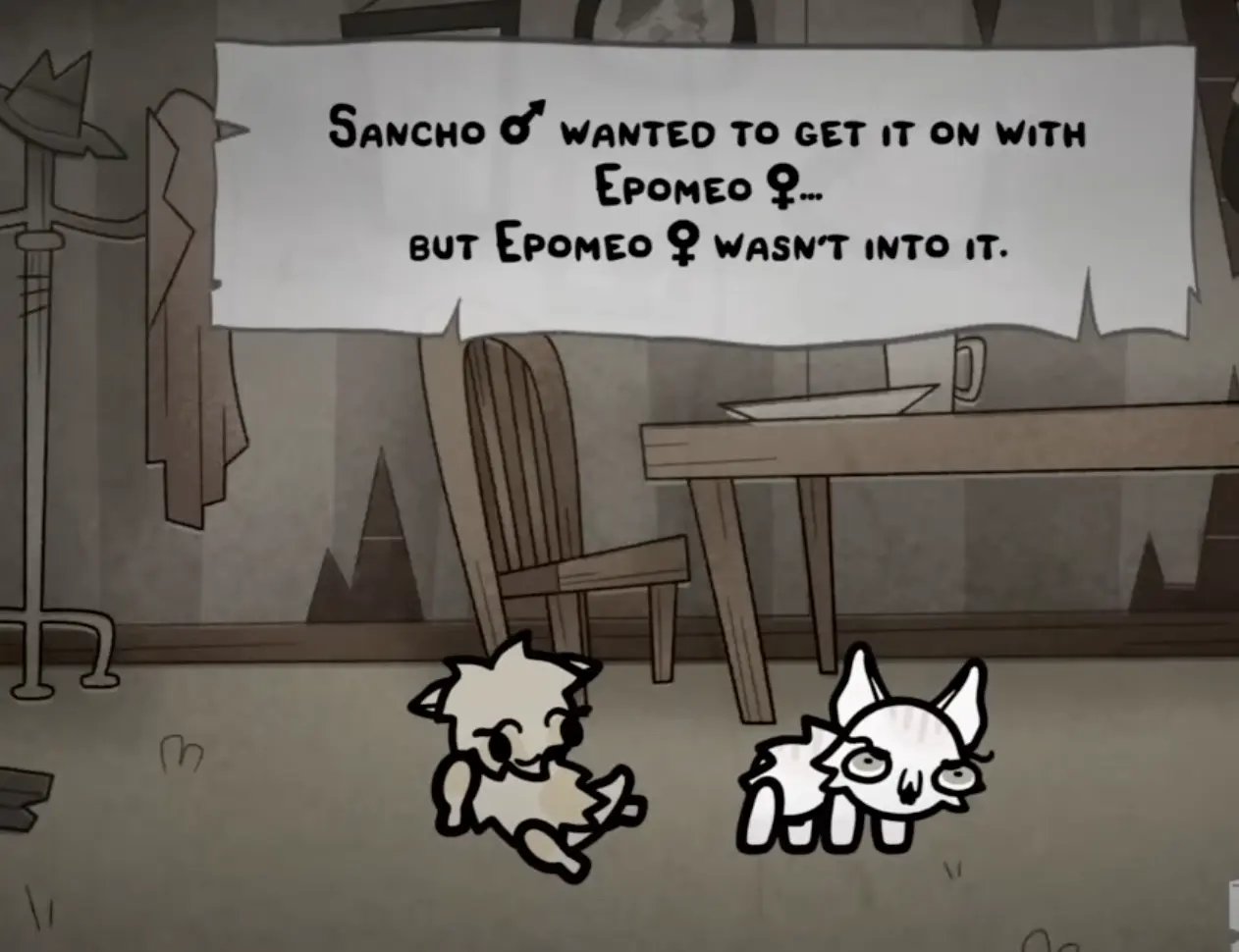
The most basic breeding requirement is that the two cats need to be placed in close proximity, such as the early attic-style setup where you place a pair together overnight.
If your cats are separated, rotated into different rooms, or not actually positioned as a breeding pair, nothing else matters.
What to do
- Put only the intended pair together
- Make sure they are in the same room
- Keep the breeding room focused instead of using it as overflow storage
If you are juggling too many cats at once, it becomes much harder to tell whether the real problem is compatibility or just bad room setup.
2. Some cats simply are not compatible
This is the part many players miss.
Even with a decent room, some cats still will not breed together. That is because breeding is affected by hidden compatibility mechanics, not just room placement.
In practice, “same room” is required, but it is not enough on its own.
That is why failed pairings can feel confusing at first. Two cats may look fine on paper, share the same room, and still reject each other because the actual blocker is invisible until you unlock more information.
3. Upgrade Tink if you want the real answer
If you are serious about troubleshooting breeding, Tink is the most important unlock.
Once you invest enough kittens into Tink, you can start seeing the hidden information that explains why a pairing is failing. That includes things like:
- libido
- aggression
- whether a cat is effectively a poor breeding partner
- whether two cats hate each other
- additional compatibility details that are otherwise invisible
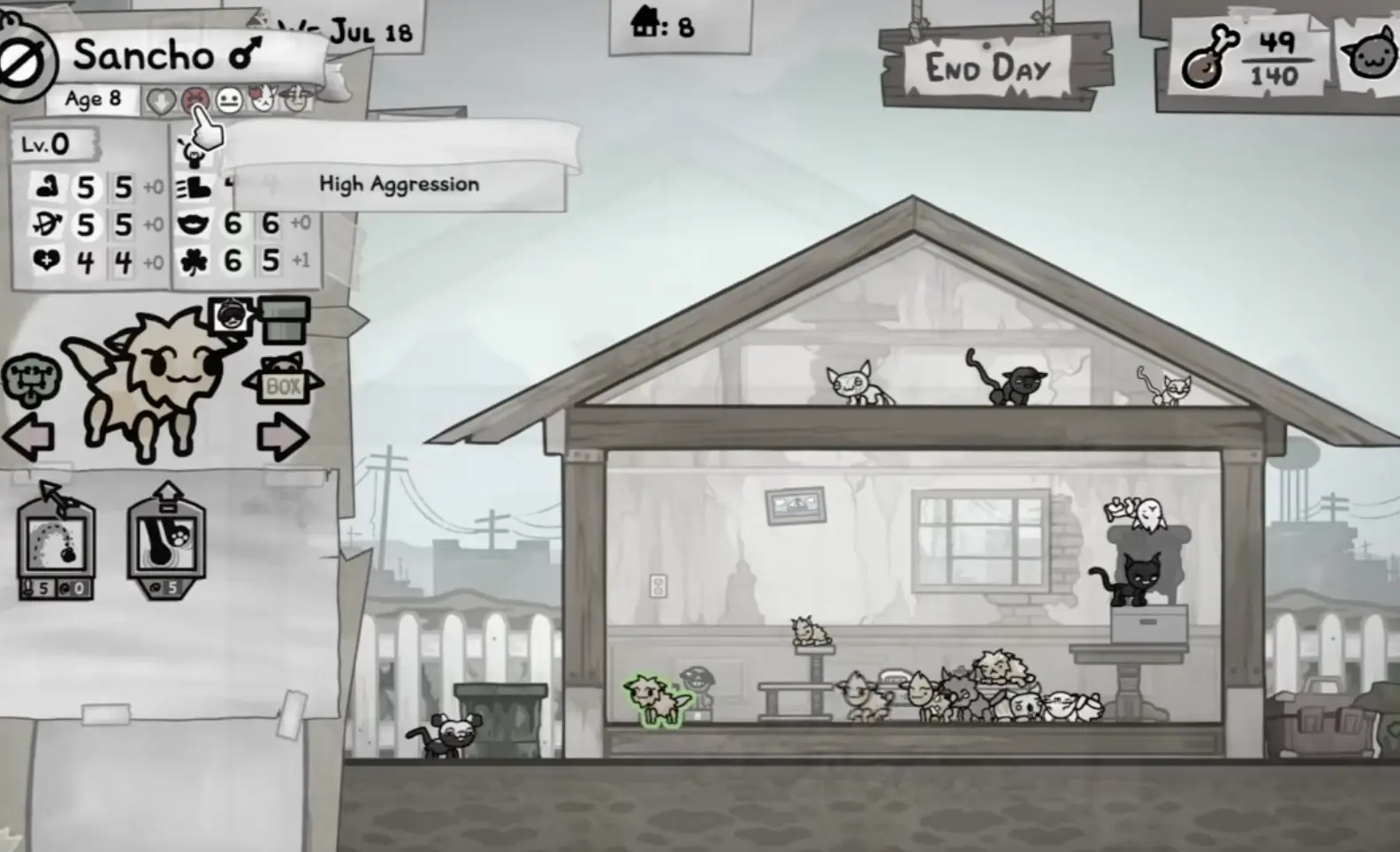
Without Tink, you are often guessing.
With Tink, the question changes from:
“Why didn’t they breed?”
to:
“This pair has low libido, aggression, or mutual hostility, so now I know what is blocking it.”
Why Tink matters so much for failed pairings
The larger breeding guide explains how the system works overall.
This page is about what to do when a specific pair keeps failing right now.
So if your cats are not breeding, upgrading Tink is not just nice to have. It is the fastest way to stop wasting nights on blind pairings.
4. Comfort matters more than many players think
If you want your cats to breed more often and fight less often, the room needs good Comfort.
This is one of the most useful distinctions in Mewgenics troubleshooting:
- Stimulation helps with inheritance quality
- Comfort helps determine whether cats behave like breeders instead of turning aggressive
That means if your problem is specifically “they are not breeding at all”, Comfort is usually a more immediate suspect than Stimulation.
5. Clean up poop and reduce room pressure
Mewgenics does not hand you a self-cleaning house.
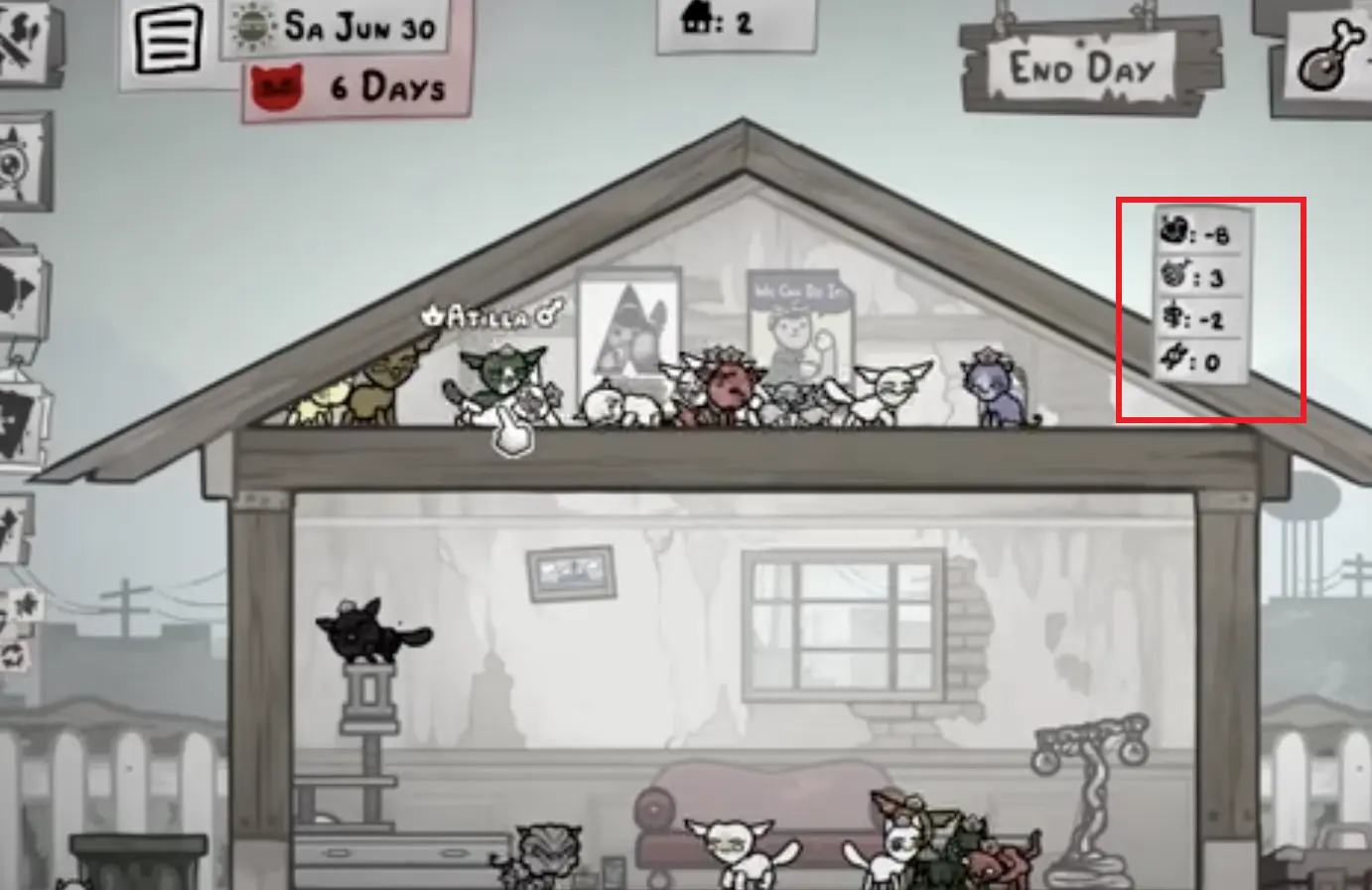
If poop piles up and you ignore it, the room’s Comfort goes down. If the room gets too messy, the breeding space becomes less stable. The same goes for crowding too many cats into one room.
What to check
- Is there visible poop or mess in the room?
- Are too many cats sharing the same space?
- Has the room become a dumping ground for overflow cats?
A lot of “why are my cats not breeding?” situations are actually just house management problems in disguise.
6. Overcrowding can quietly kill a pairing
Even if the intended pair is good, the room can still underperform if it is overloaded.
A crowded room is harder to keep clean, harder to manage, and more likely to drift toward low Comfort. If you are running a serious breeding line, do not let the breeding room double as general cat storage.
Better rule
Use a dedicated breeding space for the active pair, and move extra cats elsewhere.
That is one reason dedicated room planning matters so much later on. A pairing can fail because the room is unstable, not because the parents are bad.
7. Check orientation and gender-status rules
One of the most specific and easy-to-miss breeding blockers is orientation.
A known rule highlighted by player guides is that gay cats can breed, but only with genderless cats, which are shown with a question-mark icon.

So if a pairing looks normal but never produces kittens, check whether it is actually an orientation mismatch.
What to do
- Check whether one cat has the LGBT flag icon
- Check whether the partner is genderless
- Do not assume a pair should work just because the room setup looks correct
If you have not unlocked enough Tink information yet, this can easily look like a random failure when it is actually a rule mismatch.
8. Do not blame Stimulation for the wrong problem
This is where many players mix up breeding frequency and breeding quality.
High Stimulation helps you pass on better abilities and stronger base stats more reliably. It is an inheritance-quality lever.
But if your problem is simply:
“My cats are not breeding tonight.”
then Stimulation may not be the first thing to blame.
For troubleshooting, think about it like this.
Check Comfort first when:
- cats are fighting more than breeding
- the room is filthy
- the room is overcrowded
- pairings fail repeatedly despite using the same setup
Check Stimulation first when:
- cats do breed, but the offspring quality is disappointing
- you are trying to preserve stronger base stats or useful abilities
- you are optimizing a successful room, not diagnosing a failed one
That distinction matters because solving a failed pairing is different from optimizing inheritance. This article is about getting breeding to happen, not about maximizing every inheritance outcome.
A fast troubleshooting checklist
Use this list before ending the day.
Room check
- Are the cats in the same room?
- Are they actually positioned as the intended pair?
- Is the room clean?
- Is the room overcrowded?
- Is Comfort still high enough?
Compatibility check
- Have you unlocked Tink far enough?
- Does either cat show low libido?
- Is either cat aggressive?
- Do they hate each other?
- Are you ignoring a visible compatibility warning?
Orientation check
- Is one cat gay?
- If so, is the partner genderless?
- Are you assuming the pair should work when the icons say otherwise?
If you work through those three groups, you will solve most failed breeding attempts much faster than by guessing.
Diagnose the problem by symptom
A checklist is useful when you want to rule out the obvious. But breeding problems in Mewgenics do not always look the same in practice.
Sometimes the issue is the whole room. Sometimes it is one specific pairing. Sometimes the room is working, but one cat is the bottleneck. That is why it helps to diagnose the problem by symptom, not only by system.
Use the matrix below when you want to work backward from what you are seeing in-game.
| What you are seeing | Most likely cause | Check first |
|---|---|---|
| No cats in the room are breeding at all | Room-level failure, usually low Comfort | Clean up poop, reduce overcrowding, review room setup |
| One specific pair never breeds, but other cats do | Pair-specific incompatibility | Check Tink information, libido, aggression, hate, and orientation rules |
| Cats breed, but the offspring quality feels weak | Stimulation is too low | Check the room’s Stimulation instead of blaming the pairing |
| You try multiple partners with the same cat and nothing works | That cat may be the bottleneck | Replace that cat and compare results with a different breeder |
| Cats fight more than they breed | Comfort is too low, or the room has hostile conditions | Check Comfort, cleanup, crowding, and any obvious room instability |
| A pair looks correct on paper but still never produces kittens | Hidden compatibility or orientation mismatch | Use Tink and check whether the pair is actually allowed to breed |
| Breeding worked before, but now the room feels inconsistent | The room degraded over time | Recheck poop, crowding, overflow cats, and whether the breeding room became a storage room |
The goal is not to replace the checklist above. It is to help you prioritize the next check faster.
If the whole room looks broken, start with Comfort and cleanup. If only one pair keeps failing, inspect compatibility and orientation. If multiple pairings fail around the same cat, stop blaming the room and start questioning that breeder.
If a pair keeps failing for several nights
One failed night does not always mean much. Repeated failure does.
If a pair is in a clean, high-Comfort room and still does not breed after several nights, the diagnosis should start shifting away from the room and toward the cats themselves.
At that point, stop rechecking furniture first and start checking:
- hidden compatibility
- libido and aggression
- mutual hostility
- orientation rules
- whether one breeder is simply the recurring bottleneck
The longer a room stays stable while one pair keeps failing, the more likely the blocker is the pair, not the environment.
Common mistake: looking in the wrong place for the answer
Many players end up looking for the wrong answer on the wrong kind of page.
Different breeding pages answer different questions:
-
If you are trying to solve a failed pairing tonight, stay on this page.
-
If you want the full breeding system, including inheritance, Tink, twins, and inbreeding, read the broader breeding guide next.
-
If your real problem is room design rather than the pair itself, jump to the breeding room setup guide.
That split matters because troubleshooting pages should be immediate and practical. They should help you fix tonight’s failed pairing, not dump the entire breeding system on you.
When to stop forcing a pairing
Sometimes the answer is simple: the pair is bad for your current goal.
If you have already checked:
- same room
- Comfort
- cleanup
- overcrowding
- Tink information
- compatibility clues
- orientation rules
and the pair still keeps failing, stop forcing it.
A weak pairing wastes time, food, and room stability. It is usually better to rotate in a new candidate than to keep retrying a pair that is clearly underperforming.
A better rule of thumb
If multiple nights pass in a stable room and the same pair still fails while other cats breed normally, treat that as a signal.
You do not always need to prove the exact hidden reason before moving on. Sometimes the best diagnosis is simply:
this pair is costing more than it is worth
Related guides
If you fixed the immediate problem and want to go deeper next, read these in order:
- Mewgenics Breeding Guide: How It Works — for the full breeding system, inheritance, Tink, twins, and long-term line logic.
- Best Breeding Room Setup in Mewgenics — for room roles, furniture tradeoffs, Stimulation planning, and house structure.
Final take
If your cats are not breeding in Mewgenics, the answer usually comes down to one of four things:
- they are not set up correctly
- the room’s Comfort is failing
- the cats are secretly incompatible
- you have not unlocked enough Tink information to see the blocker
And one more rule is easy to forget:
If cats refuse to breed, diagnose Comfort and compatibility first. Optimize Stimulation second.
That single distinction will save you a lot of wasted nights.